
From Solution Containment to Collection, Every Layer Has an Operational Purpose
Once leaching solution enters a heap containing thousands or even millions of tons of ore, what ensures it reaches the collection system instead of the surrounding ground?
The answer involves more than a single geomembrane layer. A heap leach liner system combines components that contain process solution, direct it to collection points, and protect the surrounding environment.
Each component has a specific purpose. However, the system only performs as intended when its materials, interfaces, and construction details work together.
From a geosynthetics contractor’s perspective, successful construction depends on more than the specified materials. It also requires constructible details, coordinated sequencing, qualified installation, thorough testing, and protection of the completed system.
For mine owners, engineers, EPC firms, and contractors, understanding this relationship is essential. The liner system does not simply sit beneath the operation. It supports the controlled movement of solution that makes heap leaching possible.
Over the years, COMANCO has worked on complex mining containment projects where successful heap leaching depended not only on material selection but also on constructability, installation quality, and protection of completed work. While every project is unique, the same principle remains consistent: the most effective heap leach liner systems perform as complete engineered systems rather than as individual products installed independently.
How Solution Moves Through a Heap Leach Operation
Heap leaching uses chemical reactions and gravity to recover valuable minerals from ore.
First, the mine places prepared ore on an engineered heap leach pad. The mine then applies a leaching solution across the heap’s surface. As that solution travels downward, it dissolves the target mineral from the ore.
The mineral-bearing solution eventually reaches the bottom of the heap. There, the pad’s drainage and collection infrastructure directs it toward a pond or processing system. After processing, the solution may return to the heap and continue through the operating circuit.
Although the process may sound straightforward, controlling the solution requires careful coordination. The heap base must contain the liquid while allowing it to move toward the intended collection points.
That is where the geosynthetic liner system becomes critical. Whether supporting gold heap leaching operations, copper recovery facilities, or other mineral processing applications, the heap leach liner system serves as the foundation of safe solution containment, environmental protection, and efficient solution collection.
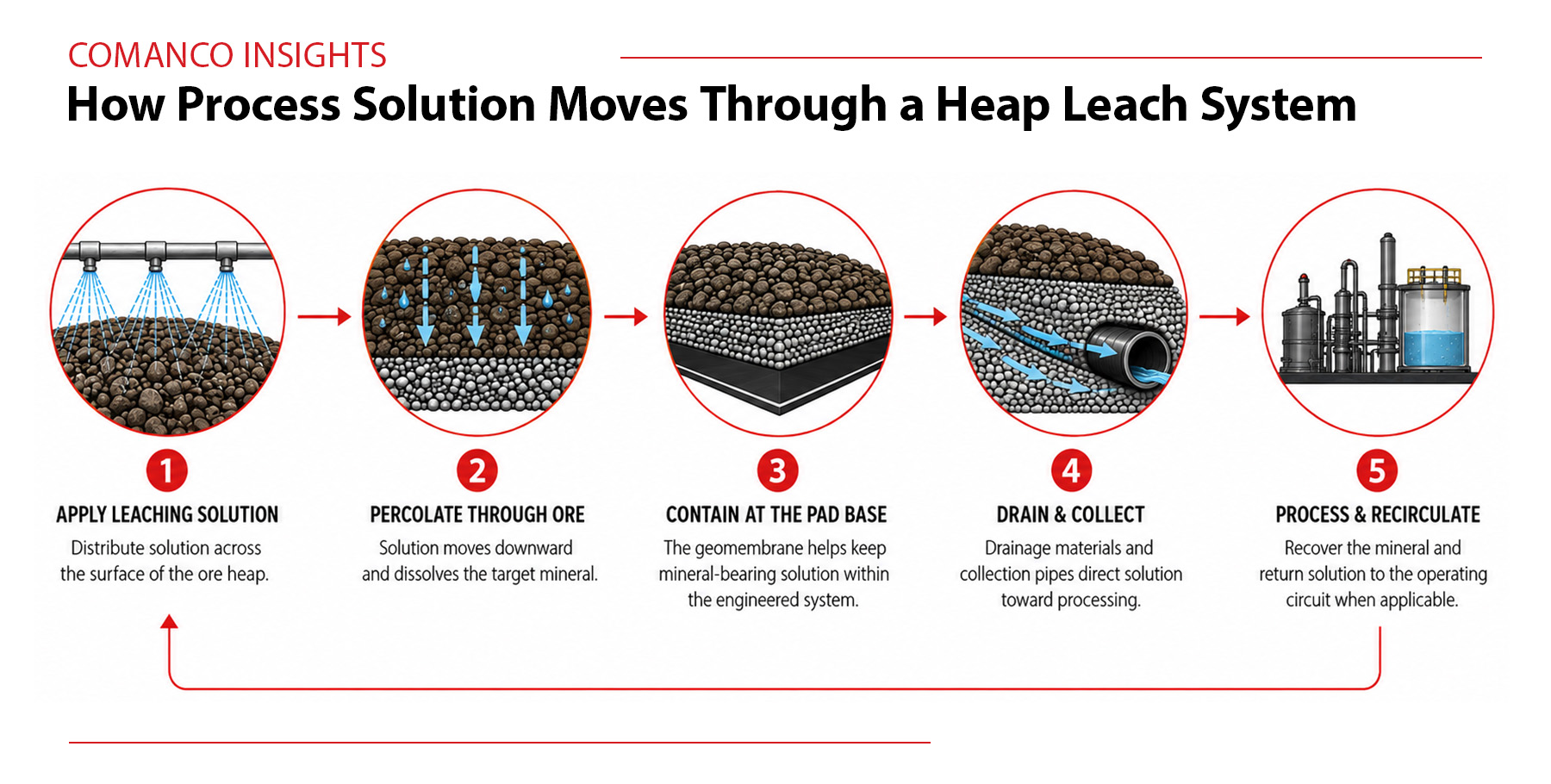
Figure 1. Diagram showing how process solution moves through a heap leach liner system from irrigation through collection and recirculation.
Containment Protects the Process and the Environment
The geomembrane serves as the primary synthetic containment barrier in many heap leach pad systems. It helps prevent process solution from migrating into the underlying soil and groundwater.
That environmental function receives much of the attention, but containment also supports the operation itself.
The solution reaching the bottom of the heap contains the dissolved mineral the mine intends to recover. Keeping that solution within the controlled process circuit allows it to enter the collection and processing system as intended.
Reliable containment therefore supports two connected objectives:
- Protecting the surrounding environment
- Maintaining control of mineral-bearing process solution
The liner does not determine metallurgical recovery. Ore characteristics, solution chemistry, irrigation, permeability, and other operational factors also affect performance. However, the operation cannot efficiently manage the solution if the containment and collection system does not control where it flows.
In that sense, environmental protection and operational performance begin with the same requirement: keep the solution within the engineered system.
A Liner System Is More Than a Geomembrane
Although the geomembrane is central to containment, it is only one part of the complete system.
The specific design varies by project. Site conditions, ore characteristics, terrain, loading, regulations, and operational requirements can all influence the selected configuration. Depending on the design, the system may include:
- Prepared subgrade: Provides a stable, smooth foundation for the overlying materials.
- Low-permeability soil layer: May provide additional containment beneath the geomembrane.
- Geomembrane: Serves as the primary synthetic containment barrier.
- Geosynthetic clay liner: May provide a supplemental low-permeability layer where specified.
- Geotextile: May provide cushioning, separation, filtration, or protection.
- Geocomposite: May provide drainage or liquid conveyance.
- Collection piping: Conveys solution toward ponds, sumps, or processing infrastructure.
- Protective cover or overliner: Protects the liner system during construction and ore placement.
- Leak-detection layer: Provides monitoring or secondary collection where included in the design.
Not every heap leach pad uses every component. The engineer of record determines the appropriate system based on project-specific requirements.
More importantly, the project team cannot evaluate these components in isolation. A strong geomembrane cannot correct an unsuitable foundation, an incompatible interface, or an obstructed drainage path. Likewise, a well-designed collection network cannot function as intended if construction damages its pipes or surrounding drainage material.
Reliable performance depends on how the complete system is designed, installed, protected, and verified.
Drainage Keeps the Solution Moving
Containment is only part of the system’s job. Once the process solution reaches the bottom of the heap, it still needs a controlled route to the collection infrastructure.
Pad grades, drainage materials, and collection pipes work together to create that route. The design directs the solution toward sumps, ponds, or processing facilities while managing liquid conditions at the base of the heap.
Effective drainage also helps limit hydraulic head, or pressure from accumulated solution, above the geomembrane. When solution cannot move freely, it may accumulate and increase that pressure. The engineer must account for this possibility when determining drainage capacity, pipe spacing, pad geometry, and other system requirements.
Field execution plays an important role in preserving that design.
COMANCO field teams frequently observe that drainage and collection components are just as critical to long-term performance as the geomembrane itself. Even a well-designed heap leach pad liner relies on properly placed drainage materials, protected collection piping, and careful sequencing to ensure process solution reaches the intended collection infrastructure.
Collection pipes must remain aligned and connected. Drainage materials must be placed without damaging the liner or crushing the underlying infrastructure. Construction traffic must follow approved access and placement procedures.
Small field decisions can affect a much larger drainage network. A displaced pipe, blocked flow path, or damaged section of liner may influence how solution moves after the area disappears beneath the heap.
A liner system must therefore do two things at once: resist downward migration and support lateral movement toward collection points.
The Buried System Must Withstand Demanding Conditions
A completed liner system operates in an environment unlike most ordinary liquid-containment applications.
Above it, the growing heap applies substantial and sustained pressure. Drainage aggregate, overliner, pipes, and ore create contact points throughout the system. Construction equipment may operate nearby as crews place protective material or build the first layers of ore.
Below it, the subgrade may respond to loading and changing site conditions. Across the pad, slopes and material interfaces can add stress.
The system may also experience:
- Angular drainage or cover material
- Differential settlement
- Thermal expansion and contraction
- Chemical exposure
- Irregular or steep terrain
- Extreme heat or cold
- Rain, snow, and wind during installation
- Concentrated stresses near penetrations and structures
- Movement during cover placement and ore stacking
These demands show why material selection cannot rely on a single property. Mining projects often present installation challenges that differ significantly from traditional containment applications. Steep slopes, remote locations, high winds, extreme temperatures, and aggressive construction schedules can all influence geomembrane deployment and welding activities. Experienced geosynthetic installation contractors understand how these field conditions affect both construction efficiency and final system performance. Thickness, chemical resistance, puncture behavior, flexibility, interface strength, welding characteristics, and compatibility with adjacent materials may all matter.
The engineer of record evaluates these conditions and specifies the materials and system requirements for the project. Manufacturers provide material data and testing information. The geosynthetics contractor contributes field experience related to deployment, welding, protection, sequencing, and constructability.
Reliable performance begins when those perspectives align.
Safe Heap Leaching Begins Before the Heap Is Stacked
Once ore covers a liner system, direct access becomes difficult. That makes the installation period especially important.
Crews must begin with an accepted subgrade that meets the project requirements. Rocks, abrupt grade changes, standing water, soft areas, and construction debris can interfere with deployment or create stress beneath the liner.
Panel layout and deployment planning come next. The installer must consider slopes, prevailing weather, access, material staging, seam locations, and the sequence of surrounding work.
During installation, technicians adjust welding equipment to match field conditions. Temperature, wind, moisture, dust, and changing geomembrane surface temperatures can affect welding conditions and installation progress.
Trial seam testing confirms whether the equipment and welding parameters produce acceptable results. Technicians then test production seams using the methods required by the project specifications and quality plans. Repairs must also be tested and documented before acceptance.
Industry guidance commonly calls for installers to perform nondestructive testing on field seams before the seams are covered. The installer’s construction quality control work remains distinct from the owner’s or engineer’s construction quality assurance program. Both provide important checks within the project’s quality process.
Installation quality involves more than the field seams. Crews must also manage:
- Wrinkles and material movement
- Pipe penetrations and boots
- Connections to structures
- Anchor trenches and terminations
- Sumps and collection details
- Transitions between construction phases
- Repairs identified during inspection
- Protection of completed areas
Each detail must be accessible and constructible, with appropriate inspection or testing methods established before installation. If crews cannot safely weld or inspect a connection, the project team may need to address the issue before construction advances.
Cover Placement Is a Critical Transition
A liner can pass its installation tests and still face risk during the next phase of construction.
Cover soil, drainage aggregate, and other protective materials must be placed without puncturing, stretching, or displacing the geomembrane. Equipment operators need clear limits for travel, turning, pushing material, and maintaining the required thickness above completed liner areas.
The placement direction can also matter. Moving cover material incorrectly may push wrinkles forward, stress seams, or shift the geomembrane. Uncontrolled traffic may damage collection pipes or reduce the effectiveness of surrounding drainage material.
Close coordination becomes essential during this transition. On large mining projects, this transition often represents one of the most vulnerable periods of the construction process. Once a geomembrane has successfully passed testing, the focus shifts toward protecting that investment. Effective communication between liner installers, earthwork contractors, HDPE pipe crews, and quality personnel helps reduce the risk of damage before ore stacking begins.
The liner installer understands where seams, patches, penetrations, and sensitive details are located. The earthwork team controls the equipment placing the protective materials. Quality personnel observe the work and document compliance with the project requirements.
When these groups communicate effectively, they can identify concerns before a completed system becomes buried and inaccessible.
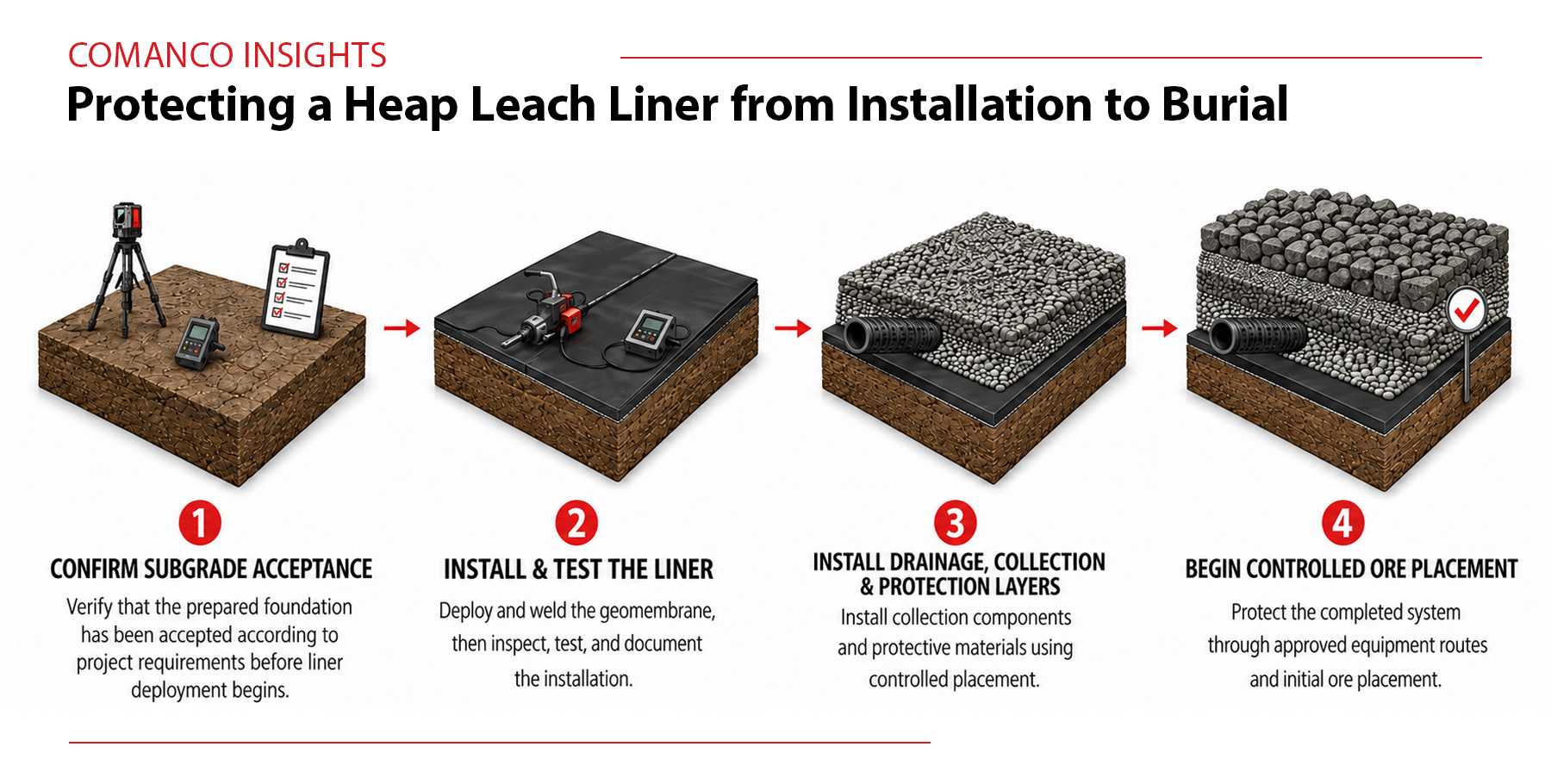
Figure 2. Illustration showing heap leach liner installation, testing, drainage placement, and ore stacking.
Constructability Connects the Design to the Operating Facility
A technically sound design must still be constructed under real field conditions.
That may involve large deployment areas, steep slopes, limited access, changing weather, overlapping contractors, and a schedule tied to mine operations. Even a small detail can create delays if crews cannot safely reach, weld, or test it.
Early installer involvement can help the project team evaluate practical questions such as:
- Can crews safely deploy the proposed panels within the available space?
- Are access routes adequate for personnel, equipment, and material delivery?
- Can pipe penetrations and collection details be welded and tested?
- Is there enough room to stage materials without affecting completed work?
- How will liner, earthwork, and piping activities be sequenced?
- How will finished areas remain protected as construction advances?
- Does the schedule allow for weather interruptions and quality verification?
- How will a future phase connect to the completed system?
Installer input does not replace engineering review. The engineer of record retains responsibility for the final design, calculations, and specifications.
Instead, constructability input helps connect the design documents to the people, equipment, sequence, and site conditions involved in containment construction. Addressing those considerations early may reduce field conflicts and help construction progress more predictably.
Why Experience Matters in Heap Leach Construction
Heap leach liner systems may appear straightforward on design drawings, but field conditions can introduce challenges that require practical construction experience. Weather, terrain, access constraints, coordination among multiple contractors, and evolving mine schedules all influence installation activities.
For this reason, many project teams involve experienced geosynthetic contractors early in the planning process. Installer feedback can help identify constructability concerns related to panel layout, access routes, pipe penetrations, sequencing, and protection of completed work before construction begins.
COMANCO has spent decades constructing containment systems for demanding environmental, industrial, and mining applications. Through that experience, our teams have learned that successful heap leach pad construction depends on more than selecting quality materials. Long-term performance is often influenced by the details of field execution, communication among project teams, and careful protection of the completed liner system throughout construction.
While engineers define the system requirements and specifications, experienced installation teams help transform those plans into a completed containment facility capable of supporting safe and efficient mining operations.
Four Questions Mine Owners Should Ask Before Construction
Mine owners and project managers do not need to make the final engineering decisions themselves. However, asking the right questions can help reveal whether the complete system has received adequate consideration.
1. What Purpose Does Each Layer Serve?
Each component specified by the engineer of record serves a defined purpose within the system, such as containment, drainage, separation, protection, or monitoring. Understanding that purpose makes it easier to identify important interfaces and construction risks.
2. Have the Materials Been Evaluated as a System?
Individual product properties provide only part of the answer. The materials must also be compatible with one another, the subgrade, the ore, the loading conditions, and the operating environment.
3. How Will Installation Quality Be Verified?
The project should establish clear requirements for subgrade acceptance, material conformance, trial seams, production testing, repairs, documentation, and final acceptance.
4. How Will Completed Work Remain Protected?
The project team should know who controls access, how protective materials will be placed, where equipment may travel, and how to report and repair damage.
These questions encourage the project team to think beyond material selection. They focus attention on how the design becomes a completed operating system.
The Liner System Makes Controlled Leaching Possible
Heap leaching depends on the controlled movement of process solution. The solution must travel through the ore, reach the bottom of the heap, remain within the containment system, and flow toward collection infrastructure.
Geosynthetic materials help make that controlled process possible. The geomembrane provides the primary synthetic barrier, while drainage, protection, separation, and collection components support the larger system.
Still, no single material determines success.
The most effective liner system is not simply the one with the strongest individual component. It is a system whose materials are compatible, whose details are constructible, and whose installation has been carefully tested and protected.
Long before the first solution reaches the ore, thoughtful engineering, coordinated construction, and disciplined field execution establish the foundation for safe, efficient heap leaching. From geomembrane installation and HDPE piping to drainage systems and liner protection, every component plays a role in maintaining containment and supporting solution recovery. Successful heap leach operations depend on a complete system that is properly designed, carefully constructed, thoroughly tested, and protected throughout its service life.
SAFETY ★ QUALITY ★ SERVICE
COMANCO is an environmental, commercial, and civil construction company specializing in constructing containment facilities.
Heap leach liner systems require precise installation, rigorous quality control, and close coordination among the teams responsible for earthwork, piping, drainage, and containment construction. COMANCO is a leading geosynthetics contractor with extensive experience supporting mining containment projects throughout North America. Our services include geomembrane installation, geosynthetic clay liner installation, HDPE pipe installation, earthwork, liner repair, and containment system construction for heap leach facilities and other mining infrastructure.
By combining field experience, constructability expertise, and a commitment to Safety, Quality, and Service, COMANCO helps mining clients build containment systems designed to support long-term operational performance. Contact COMANCO to discuss the containment and installation needs of your next mining project.
📍 4301 Sterling Commerce Dr, Plant City, FL 33566
📞 (813) 988-8829
🌐www.comanco.com