
COMANCO Performs Annual Maintenance on Rapid Infiltration Basins to Support Groundwater Recharge
Rapid Infiltration Basins, commonly referred to as RIBs, play a quiet yet important role in water management across Florida. These systems are designed to capture and filter stormwater, allowing it to percolate back into the ground and recharge local aquifers. When functioning as intended, they help sustain groundwater supplies that communities, agriculture, and industry rely on.
What often goes overlooked is how dependent these systems are on consistent maintenance. Without it, filtration performance can decline, slopes can become exposed, and liner integrity can be compromised. Over time, these issues can reduce infiltration efficiency and pose risks to surrounding soil and groundwater.
Maintaining RIB Systems
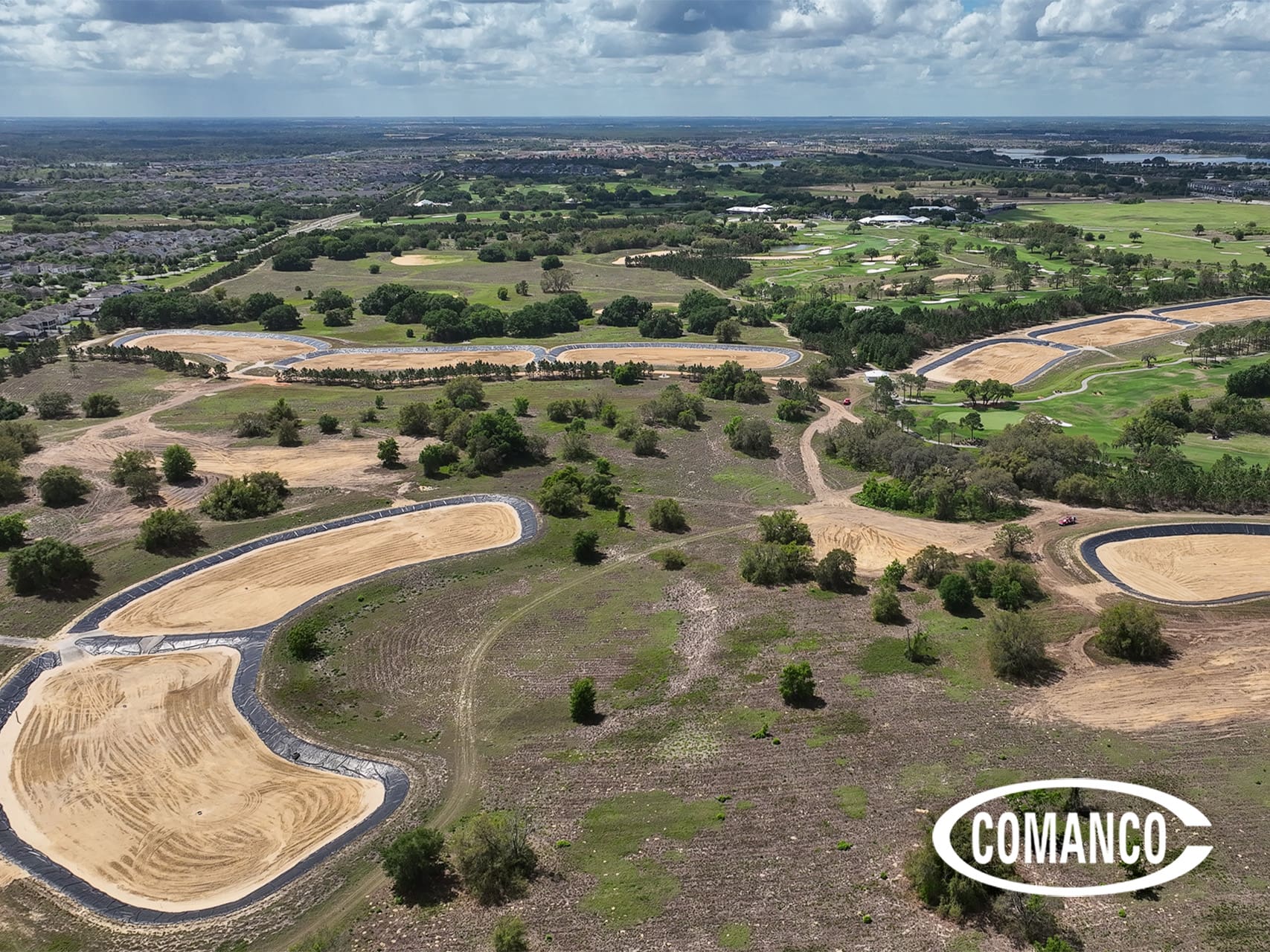
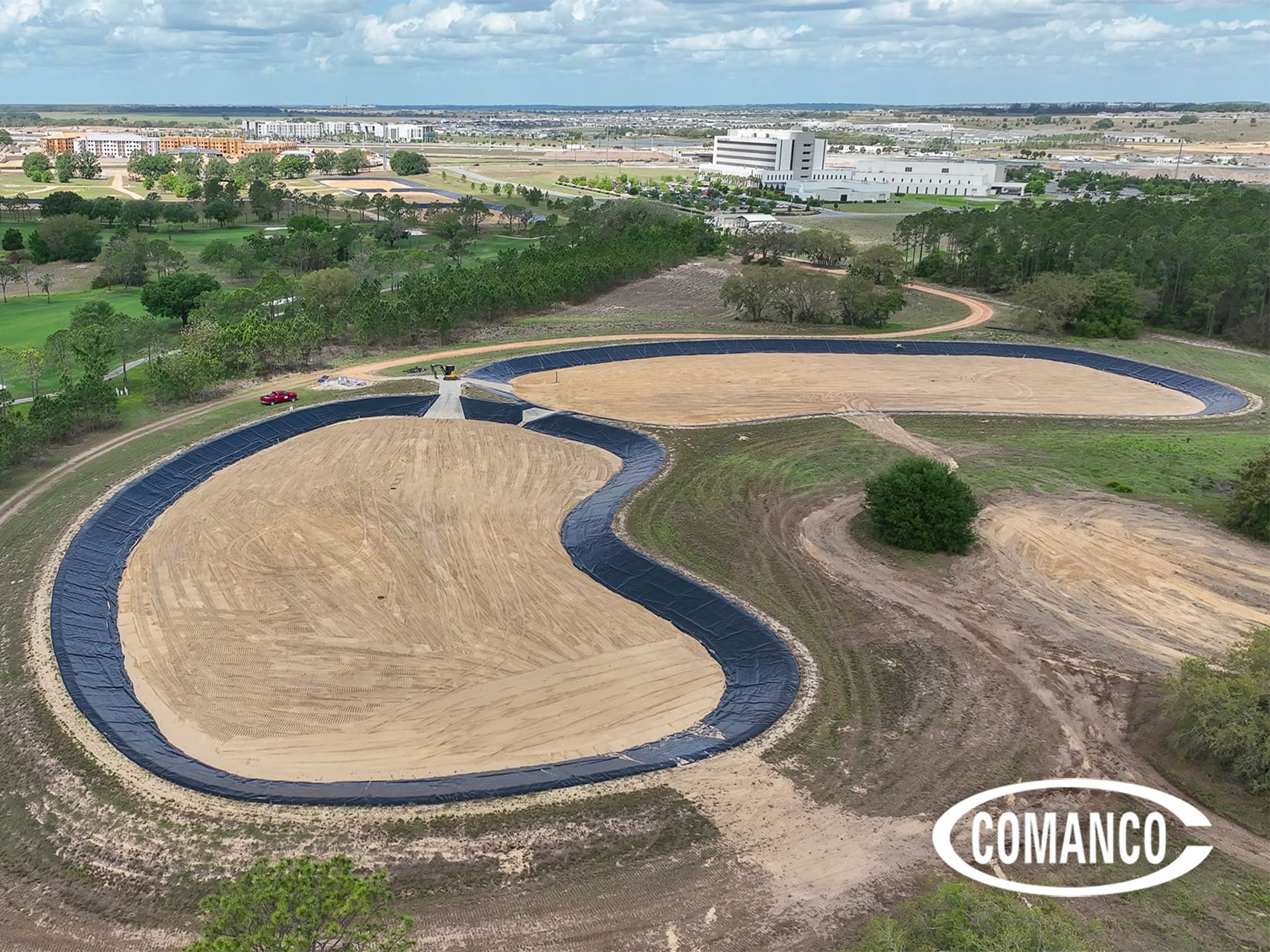
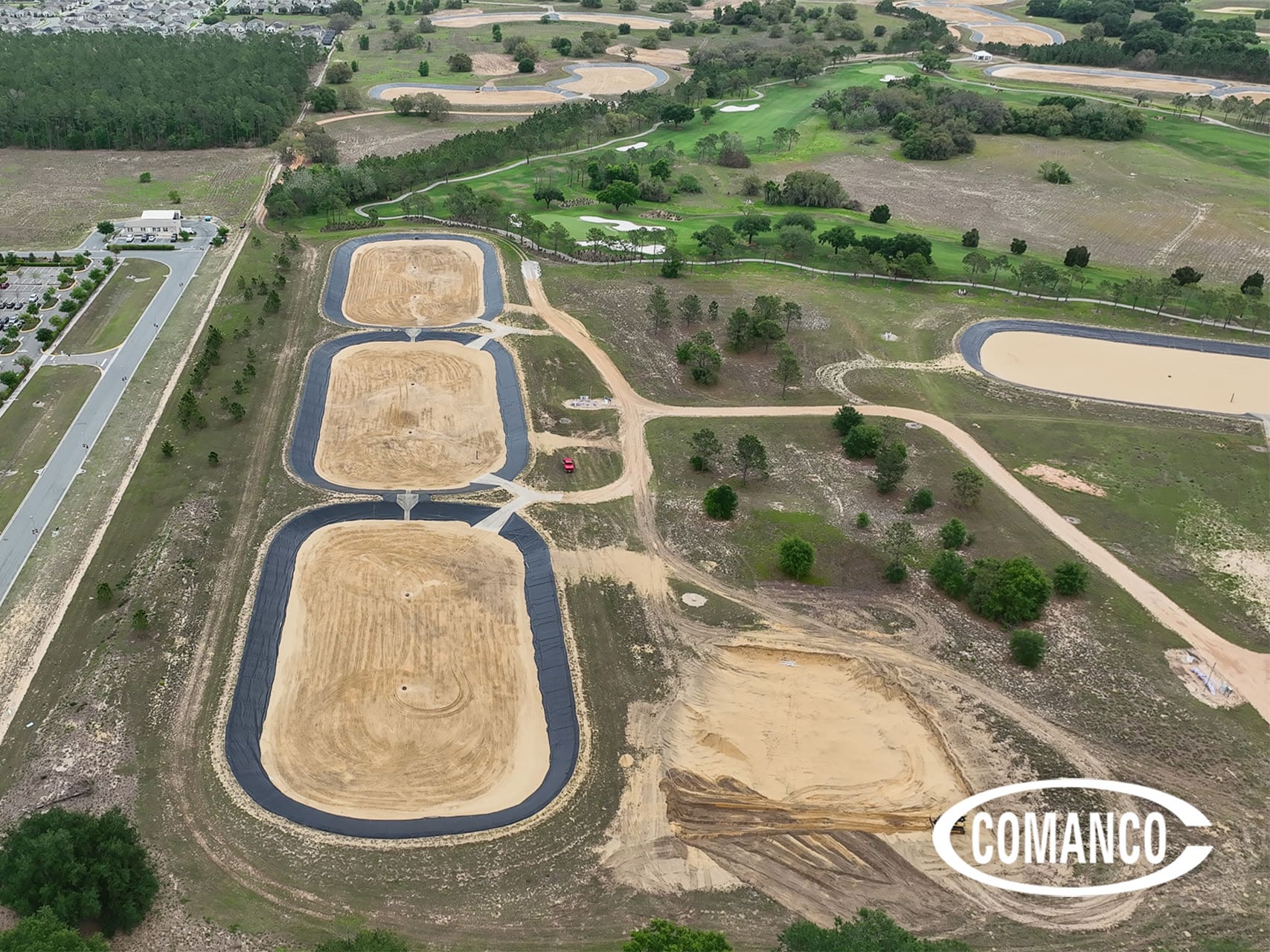
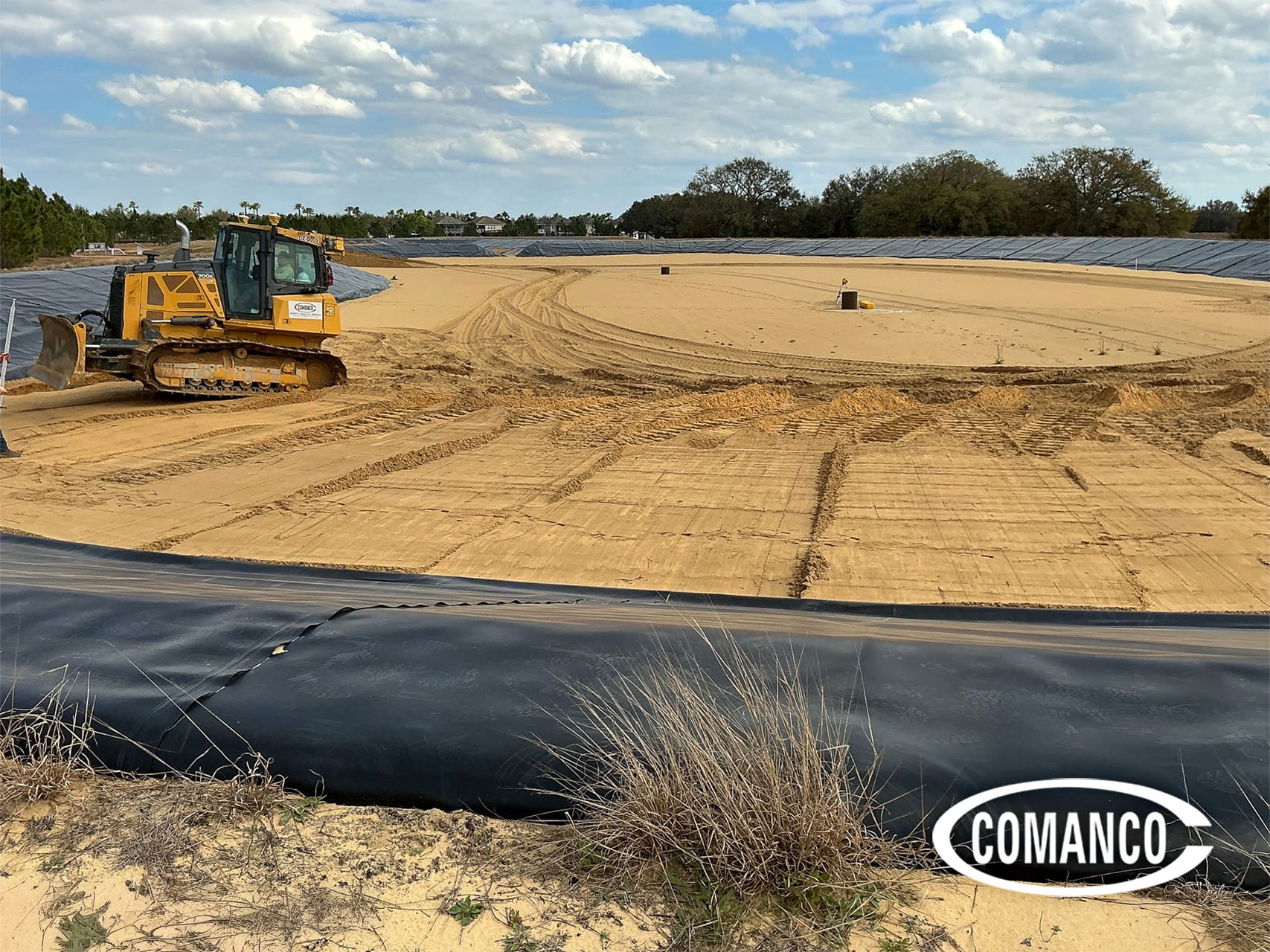
Unlike traditional containment ponds, RIBs are designed with a specific balance of permeable and lined surfaces. The basin floor typically contains filtration sand that allows water to move downward, while the slopes are lined to maintain structural stability and direct flow. This design introduces a unique challenge in the field.
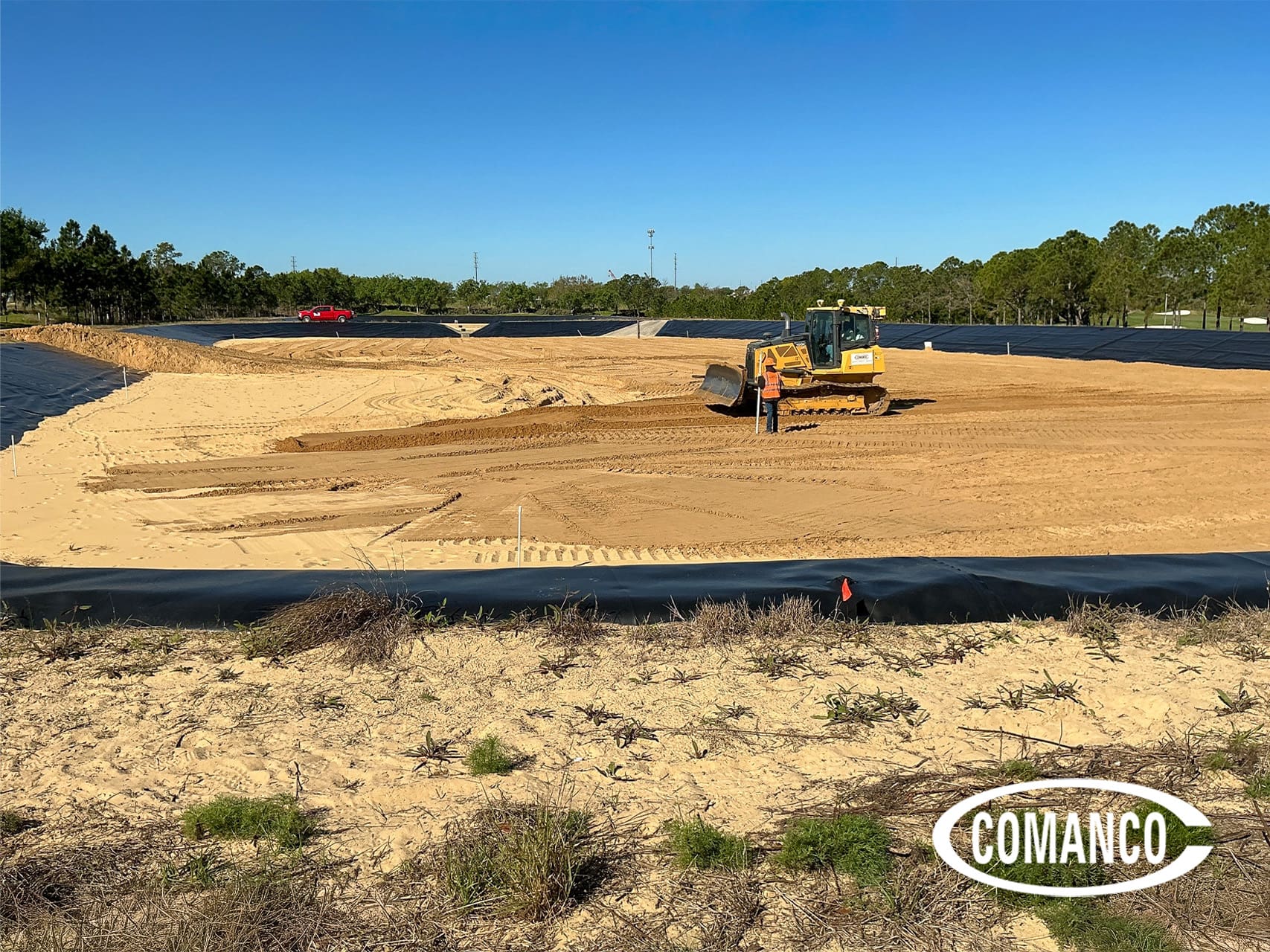
One of the most common issues is the loss of filtration sand due to wind erosion. Over time, the sand layer can thin or shift, reducing the basin’s ability to filter and infiltrate water effectively. Reestablishing this layer requires careful sourcing, placement, and grading of material to match the original design intent.
At the same time, the exposed liner on the slopes remains subject to wear, environmental stress, and occasional damage. Even small defects can lead to larger problems if not addressed early. Identifying and repairing these areas requires experienced crews who understand both the material and the operating environment.
These conditions create a maintenance scenario that is less about large-scale installation and more about precision, coordination, and repeatability.
Managing RIB Maintenance
Effective RIB maintenance starts with a clear understanding of system performance and condition. Operators use regular inspections to identify areas where sand has been displaced or where liner repairs are needed. Addressing these issues early helps maintain consistent infiltration rates and prevents more extensive work later.
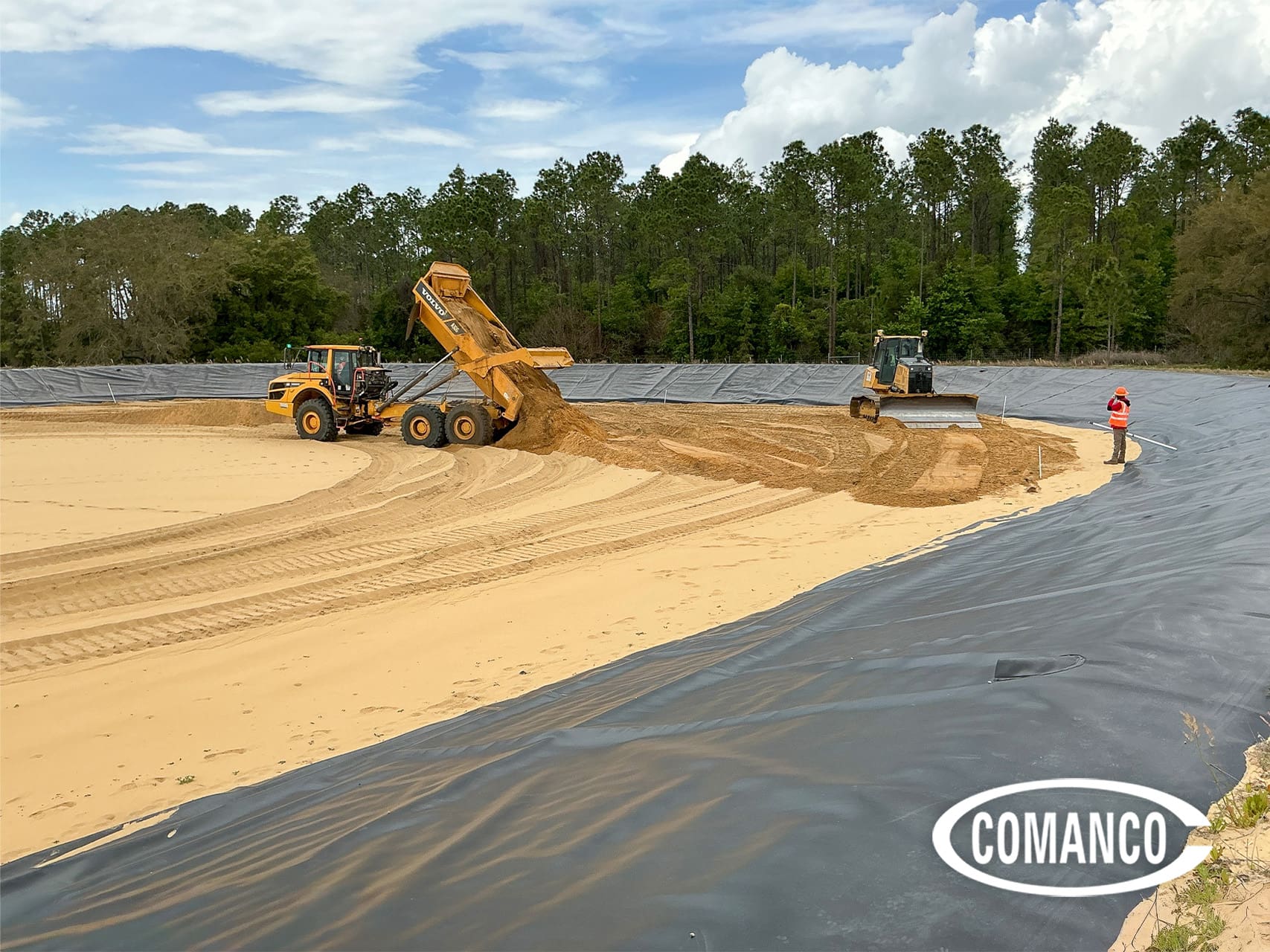
Replenishing filtration sand is not as simple as placing new material. Crews must work with onsite soils, manage haul routes, and ensure even distribution across the basin floor. Equipment coordination becomes critical, especially when working within confined basin areas where multiple operations are happening at once.
Liner repair work requires a similar level of attention. The crew must properly prepare, weld, and test each repair to confirm integrity. Quality control procedures, such as non-destructive testing, ensure that repairs meet performance standards and restore the liner’s function.
Safety is also a key consideration. Working with heavy equipment on basin slopes and within active work zones requires clear communication, defined roles, and constant awareness of changing conditions.
Delivering Consistent Maintenance in the Field
COMANCO recently completed annual maintenance work on a series of Rapid Infiltration Basins for a long-term client. This ongoing partnership underscores the importance of maintaining these systems year after year.
This year’s work included replenishing filtration sand using onsite material and performing approximately 68 liner repairs across multiple basins. The project was successfully wrapped up in early April under the leadership of Superintendent Todd Kirkman, Project Engineer Alex Kusik, and Sr. Project Manager Michael Taylor.
In the field, success came down to coordination and communication. Crews worked simultaneously on excavation, hauling, and placement operations, using radios to stay connected and keep everything moving safely and efficiently. Their teamwork paid off, with the project completed without a single incident.
The crew performed liner repairs alongside sand replacement work. Each repair was completed with proper surface preparation and quality control testing to confirm seam integrity. Maintaining this level of quality is essential in systems where long-term performance depends on both filtration and containment elements working together.
Supporting Long-Term Groundwater Sustainability
The value of this type of work is not always visible once the project is complete. RIB systems operate below the surface, quietly filtering water and supporting aquifer recharge. However, their effectiveness depends on the condition of both the filtration media and the liner system.
By maintaining these basins, COMANCO helps ensure that groundwater recharge continues as designed. This supports water availability across the region and contributes to the long-term sustainability of local resources.
Annual maintenance may not carry the scale of new construction, but it plays a critical role in preserving system performance. Addressing issues early, executing work safely, and maintaining quality standards all contribute to doing the job right the first time.
For owners and operators, the takeaway is straightforward. Consistent maintenance is not optional for systems like these. Protecting both the infrastructure and the environment it supports is essential.
SAFETY ★ QUALITY ★ SERVICE
COMANCO is an environmental, commercial, and civil construction company specializing in constructing containment facilities.
Maintaining Rapid Infiltration Basins requires consistent attention to filtration performance and liner integrity to ensure systems operate as designed. Annual maintenance activities such as sand replacement and targeted liner repairs help protect groundwater recharge and extend the life of these systems. With the right field execution, owners can avoid larger issues and maintain reliable long-term performance.
Contact COMANCO to learn how our team supports ongoing maintenance and environmental system reliability.
📍 4301 Sterling Commerce Dr, Plant City, FL 33566
📞 (813) 988-8829
🌐 www.comanco.com