
by COMANCO | Last updated: August 11, 2026
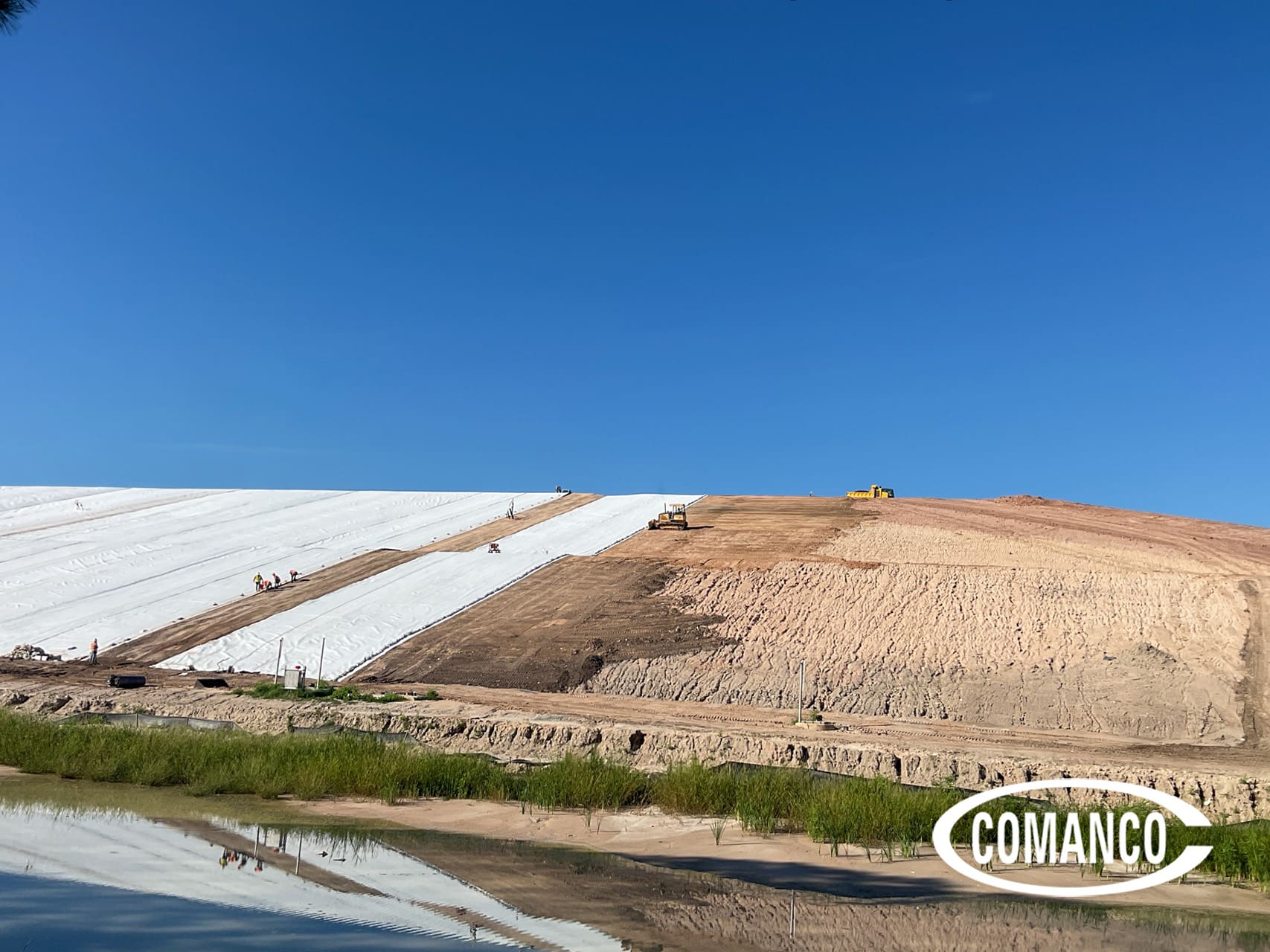
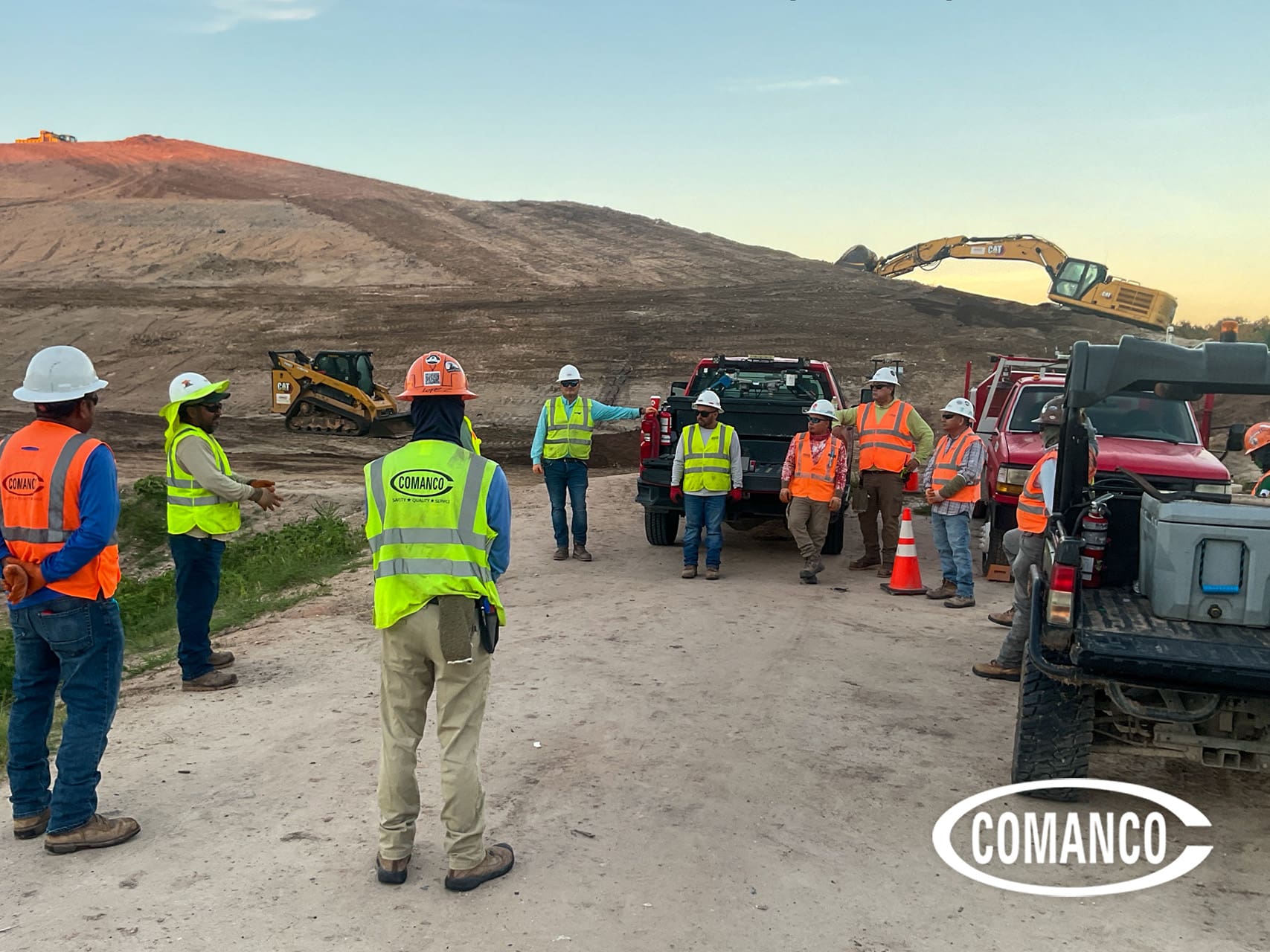
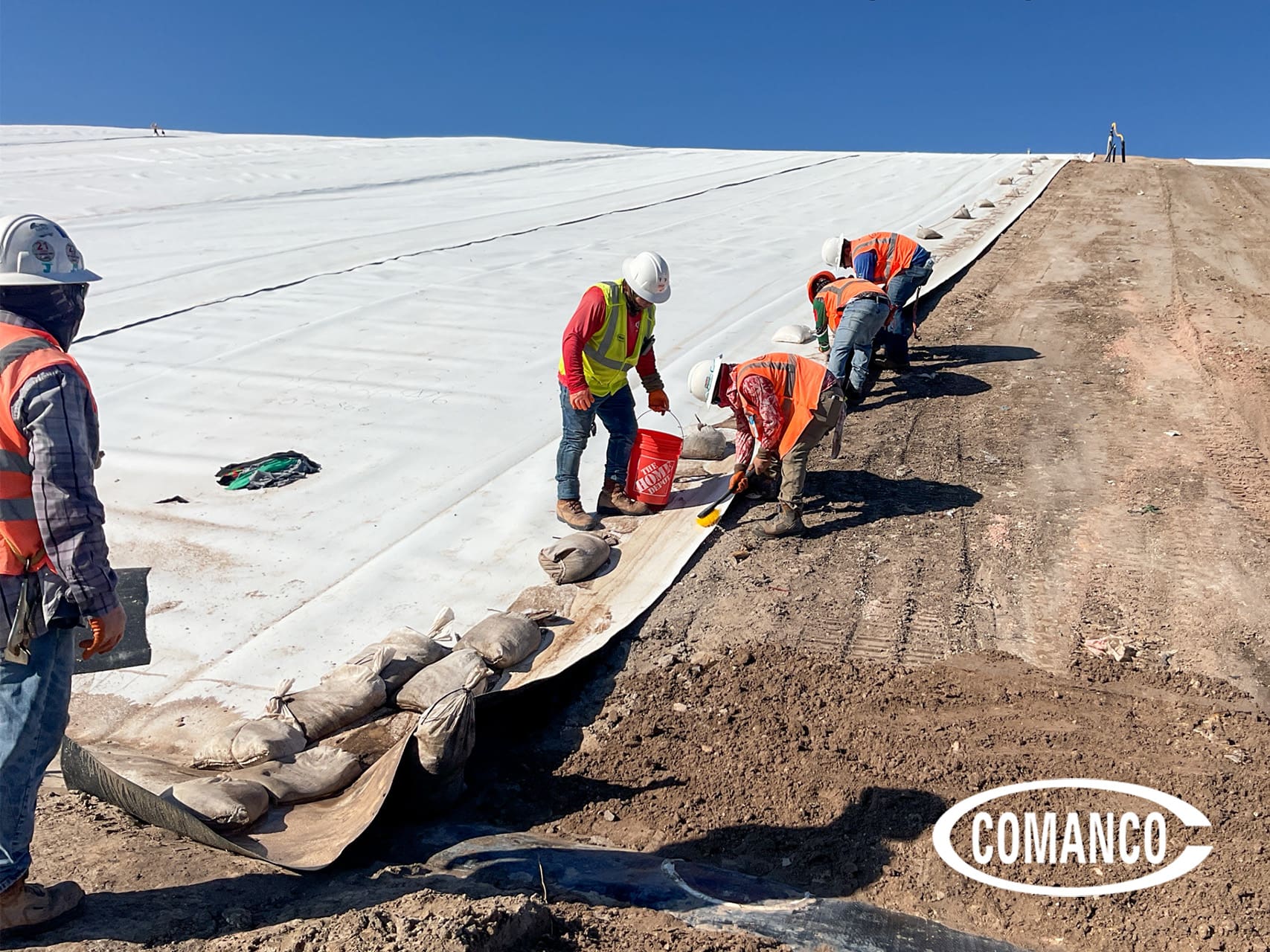
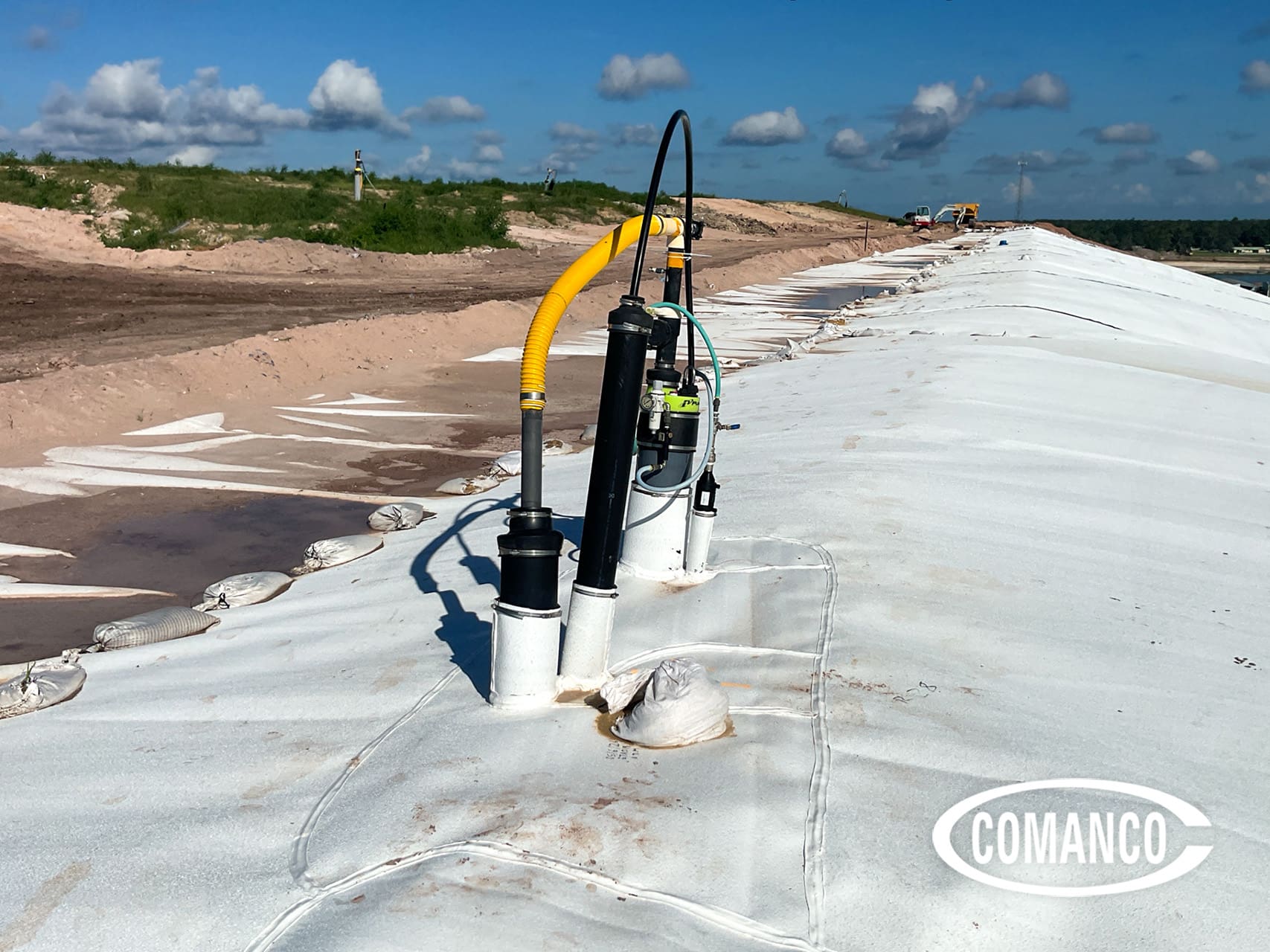
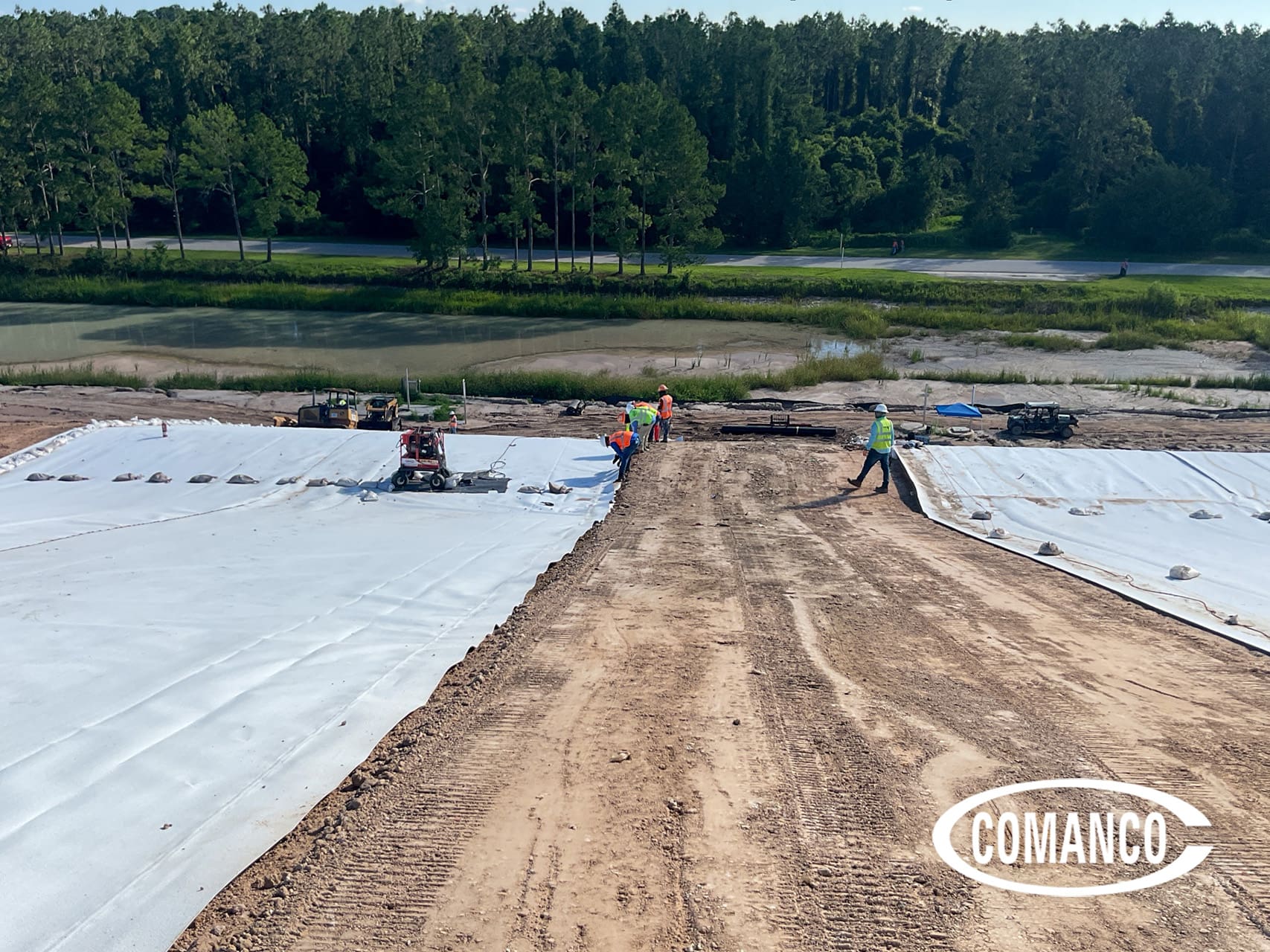
COMANCO documented every ballast trench weld in real time on a North Florida landfill closure. QC Technician Hector Yanes logged each weld in GeoCAAB as crews completed it. The project covers more than 365,500 square feet of white 60-mil textured HDPE geomembrane. Crews welded 4,622 linear feet of ballast trench, which is nearly nine-tenths of a mile. Superintendent Jorge Gomez led the field team. Below, we explain what geomembrane quality control involves, how crews test seams, why a ballast trench replaces cover soil, and what real-time documentation changes.
What is geomembrane quality control?
Geomembrane quality control covers every check that confirms a liner system will hold. It starts when material arrives on site and then continues through seaming, testing, and final documentation. The goal is simple. Specifically, crews must prove that each seam meets specification before anything covers it.
Two separate programs usually run side by side. The installer performs quality control, or QC, on its own work. A third party performs quality assurance, or CQA, as an independent check.
Both programs depend on records. A seam that passed a test but has no documentation cannot be verified later. For that reason, documentation is not paperwork after the fact. It is part of the installation work itself.
How does geomembrane quality control verify seams?
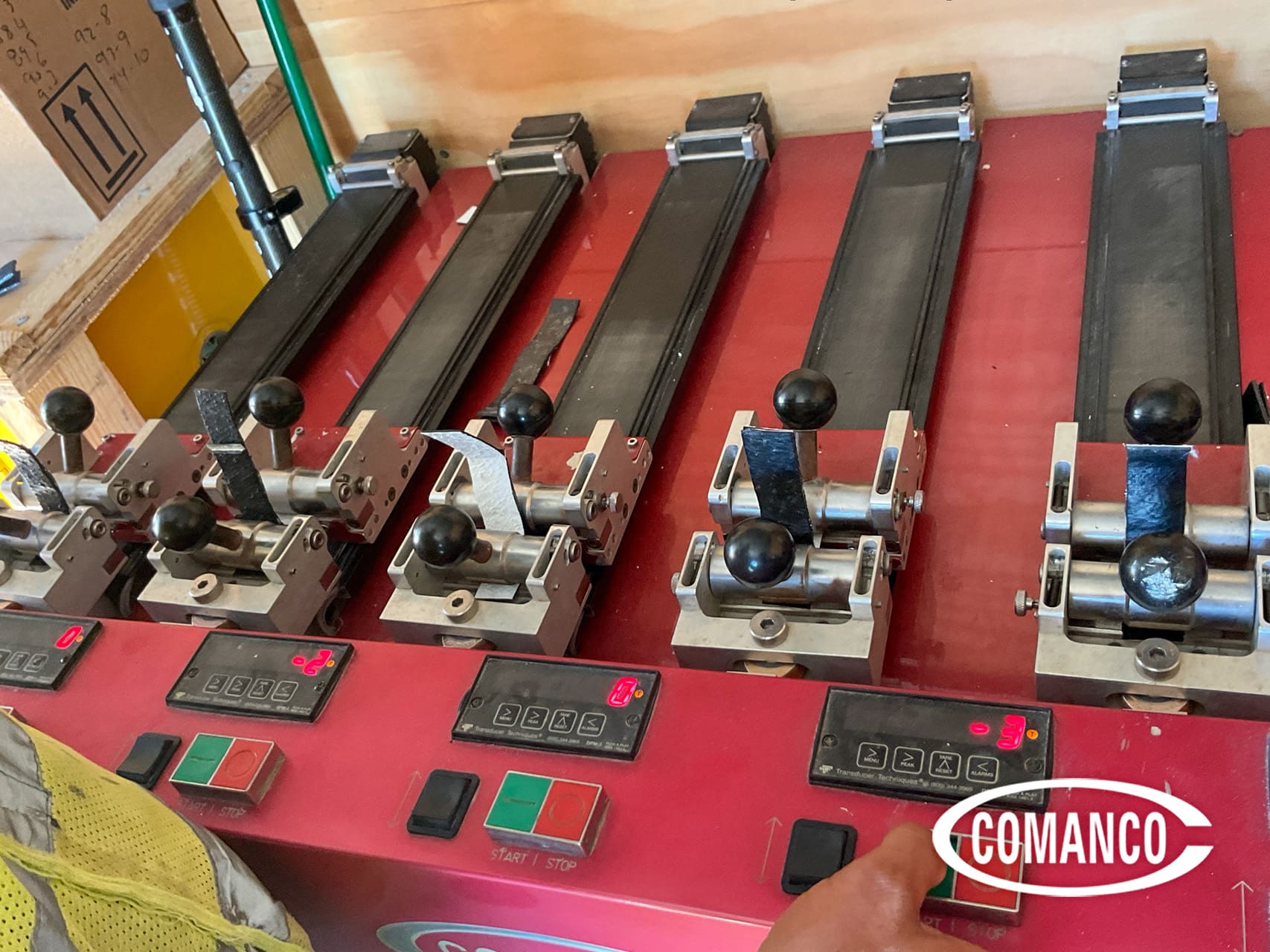
Crews test seams two ways. First, nondestructive tests check every inch of seam without damaging it. Second, destructive tests cut samples at intervals and pull them apart in a lab.
The table below lists the ASTM standards that govern each method.
| Method | ASTM standard | Type | What it shows |
|---|---|---|---|
| Pressurized air channel | D5820 | Nondestructive | Continuity of dual-track fusion seams over long runs |
| Vacuum chamber | D5641 | Nondestructive | Continuity of extrusion welds, details, and repairs |
| Spark test | D6365 | Nondestructive | Continuity where a conductive wire is embedded |
| Peel and shear | D6392 | Destructive | Seam strength of thermo-fusion welds |
| Chemical fusion seams | D6214 | Destructive | Integrity of chemically fused field seams |
Source: ASTM International standards D5820, D5641, D6365, D6392, and D6214.
Nondestructive testing covers the full seam length, so it catches gaps anywhere along the weld. However, it measures continuity rather than strength. Destructive testing measures strength directly, but it only samples. Therefore, projects use both.
Because a dual-track fusion weld leaves an air channel between two parallel welds, crews can pressurize that channel and watch for pressure loss. This single method verifies long runs quickly, which is why fusion welding dominates production seaming.
What is a ballast trench system?
A ballast trench system anchors a geomembrane using weighted trenches formed into the liner itself. By contrast, traditional closures hold the liner down with cover soil and sod.
On this project, the ballast trench design eliminates the need for those materials. As a result, the closure requires less imported soil and less vegetation establishment.
The tradeoff falls on the welding. Ballast trenches demand a specialized fusion welding machine and welds in geometry that ordinary panel seaming never encounters. Consequently, precision matters more here than on an open panel run.
What did the North Florida landfill closure involve?
The project numbers appear in the table below.
| Item | Quantity |
|---|---|
| White 60-mil textured HDPE geomembrane | 365,500+ SF |
| Ballast trench welded | 4,622 LF |
| Geomembrane area, in context | More than six football fields |
| Ballast trench length, in context | Nearly nine-tenths of a mile |
| Application | Landfill closure, North Florida |
Crews welded 4,622 linear feet of ballast trench, a distance of nearly nine-tenths of a mile. That run is more than eight times the height of the Washington Monument. Meanwhile, the 365,500 square feet of geomembrane covers more than six football fields laid side by side.
In addition, Superintendent Jorge Gomez led the installation and welding work on this landfill closure project.
How does real-time weld documentation work?
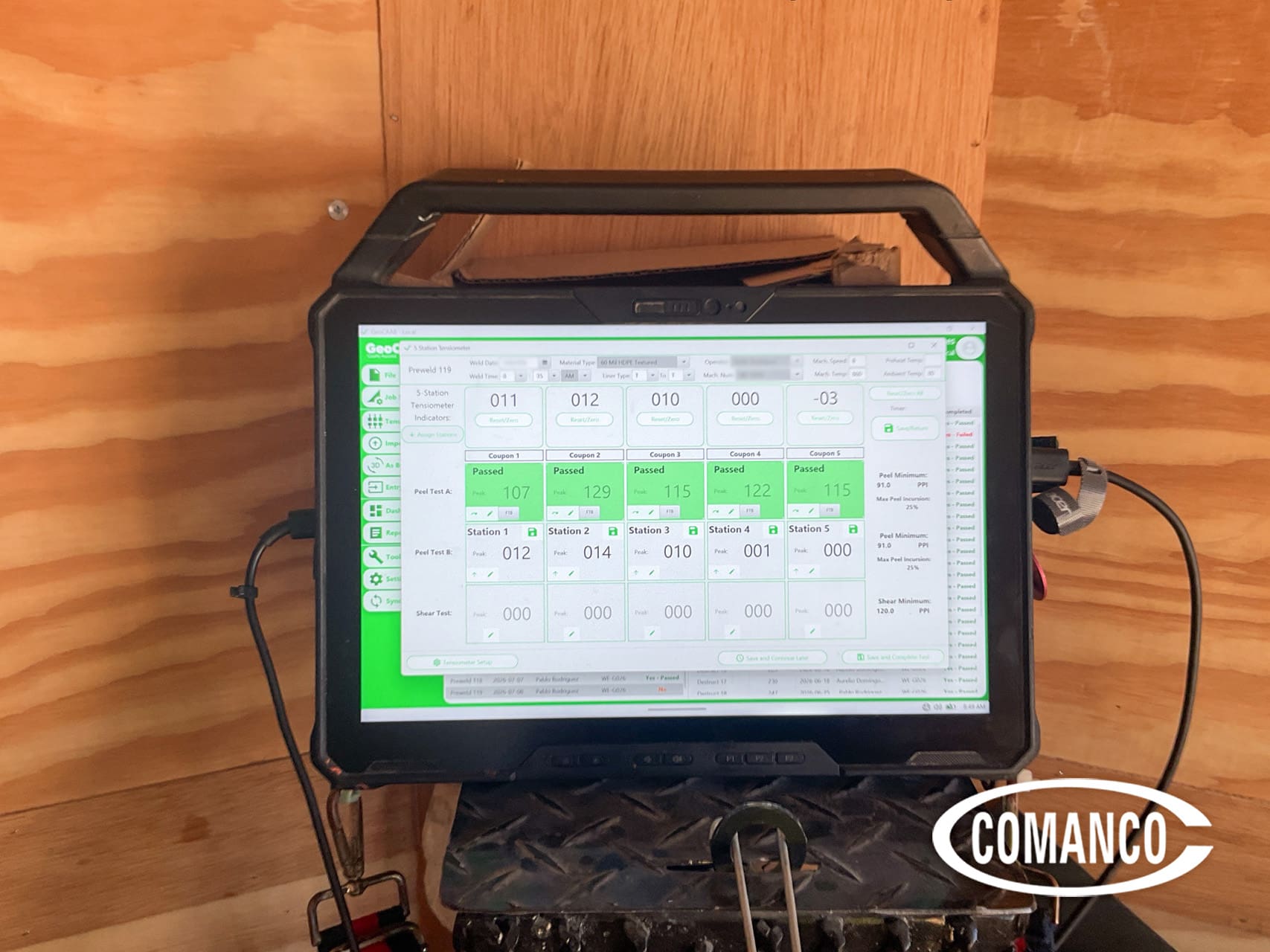
GeoCAAB is computer-aided as-built software for geosynthetic installations. Specifically, it uses GPS mapping to record where each weld sits and what test results it produced.
Hector Yanes logged every ballast trench weld as crews finished it. Rather than filling out paper forms and compiling them after construction, he captured each record in the field.
That difference matters for three reasons. First, stakeholders see welding progress immediately instead of weeks later. Second, every weld carries a GPS location, so anyone can find it again. Finally, the project submittal package assembles itself as the work proceeds.
As a result, the record delivers full traceability. Should a question arise years later, the record shows which weld sits where and how it tested. That same record supports any future liner repair work.
Why does geomembrane quality control documentation matter?
A closure cap has to perform for decades under regulatory scrutiny. Therefore, owners, engineers, and regulators all need evidence that the installation met specification.
Digital records also shorten the feedback loop during construction. When a technician logs results as they happen, a pattern shows up while crews are still on site. Consequently, corrections happen immediately rather than after demobilization.
Paper records can achieve the same accuracy, but they surface problems later. Speed is the real advantage here, not accuracy alone.
SAFETY ★ QUALITY ★ SERVICE
COMANCO is an environmental, commercial, and civil construction company specializing in constructing containment facilities.
Exceptional containment systems begin with exceptional quality control. From precision welding to real-time documentation with GeoCAAB, COMANCO is committed to delivering reliable geomembrane installations backed by experienced professionals and proven quality assurance processes. Contact COMANCO to learn more about our environmental containment solutions and commitment to excellence.
4301 Sterling Commerce Dr, Plant City, FL 33566
LinkedIn | Facebook | Instagram | X | YouTube
Frequently asked questions
What is geomembrane quality control?
Geomembrane quality control is the set of checks confirming that a liner system meets specification. It spans material verification, seam testing, and documentation. The installer runs QC on its own work, while a third party often runs independent CQA alongside it.
What ASTM standards apply to geomembrane seam testing?
Four standards cover the common methods. ASTM D5820 governs pressurized air channel testing of dual-track seams, ASTM D5641 governs vacuum chamber evaluation, and ASTM D6365 governs spark testing. For destructive work, ASTM D6392 governs peel and shear testing of thermo-fusion seams.
Who performs geomembrane quality control on a project?
The installer performs quality control on its own work, usually through a dedicated QC technician. An independent firm typically performs construction quality assurance, or CQA, as a separate check. Owners and regulators rely on both records.
What is the difference between destructive and nondestructive seam testing?
Nondestructive tests check continuity across the entire seam without damaging it. Destructive tests cut coupons at intervals and measure peel and shear strength in a lab. Projects use both, since continuity and strength are different properties.
What is a ballast trench on a geomembrane liner?
A ballast trench is a weighted anchor formed into the liner that holds it in place. It can replace the cover soil and sod that traditional closure designs rely on.
What is 60-mil textured HDPE geomembrane?
It is a high-density polyethylene liner 60 thousandths of an inch thick with a roughened surface. The texture raises friction against adjacent layers, which improves stability on slopes.
Why use white geomembrane instead of black?
A white surface reflects sunlight and therefore runs cooler than black. Lower surface temperature reduces thermal expansion and wrinkling during installation, and it makes the working surface more tolerable for crews.
How long does a landfill closure cap need to last?
Regulators generally require post-closure care for at least 30 years, and the cap is designed to function well beyond that. Long design life is exactly why installation records matter.