
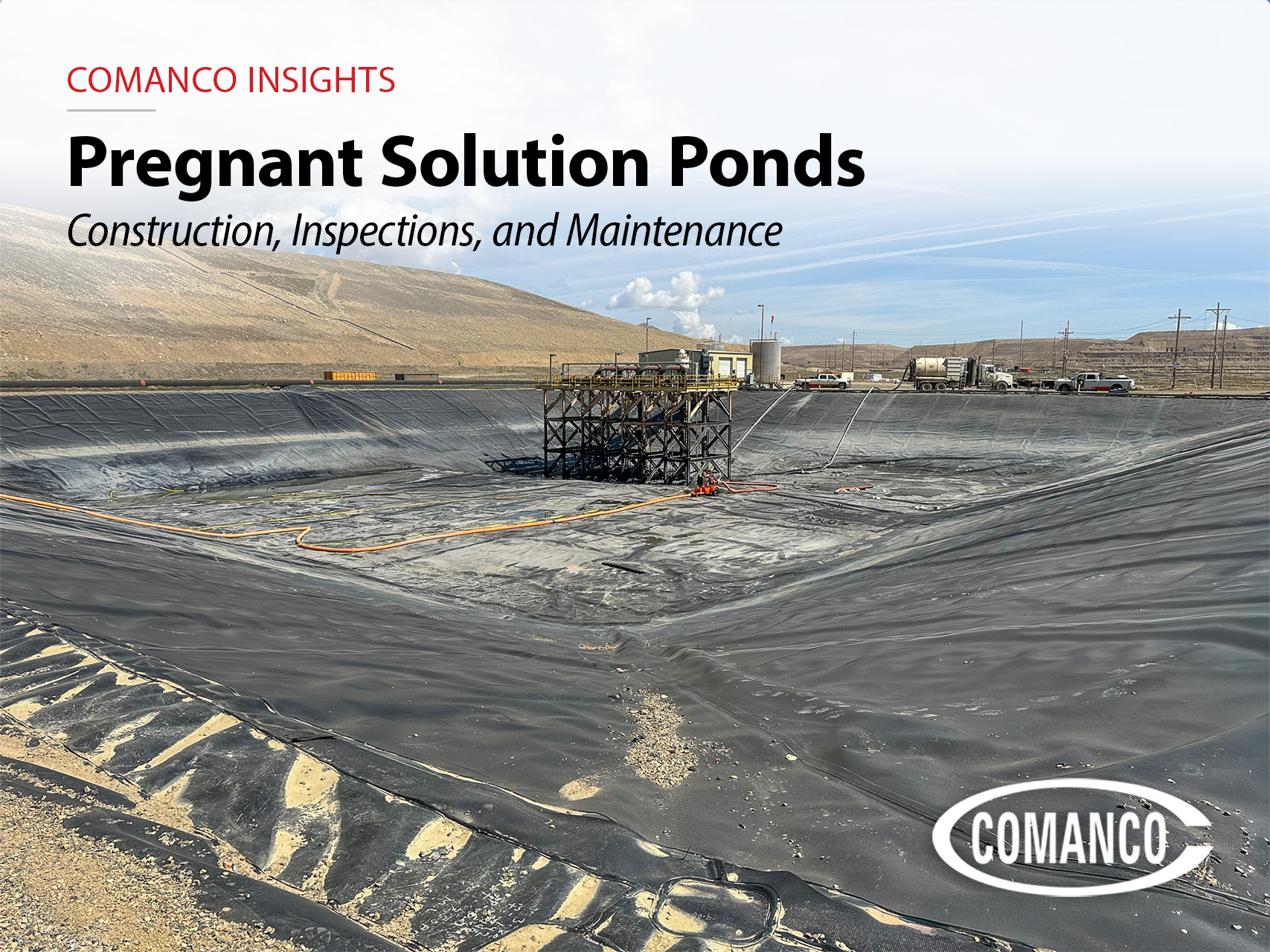
How quality installation, field coordination, and ongoing care help protect mineral-bearing solution.
What happens when a pregnant solution pond needs a liner repair while solution continues to drain from the heap? Before crews can reach the affected area, the mine must plan how to manage incoming flow, establish safe access, and prepare for the work.
That challenge shows why containment depends on more than the liner alone. Engineering requirements, construction quality, operating practices, and maintenance planning work together to protect mineral-bearing solution and the surrounding environment.
As a mining containment and geosynthetics contractor, COMANCO contributes installation expertise, constructability input, quality-control testing, and repair support. The engineer of record remains responsible for design decisions, calculations, material selection, and technical specifications. Understanding how these responsibilities connect helps mine owners and project teams prepare for both construction and ongoing maintenance.
What Is a Pregnant Solution Pond?
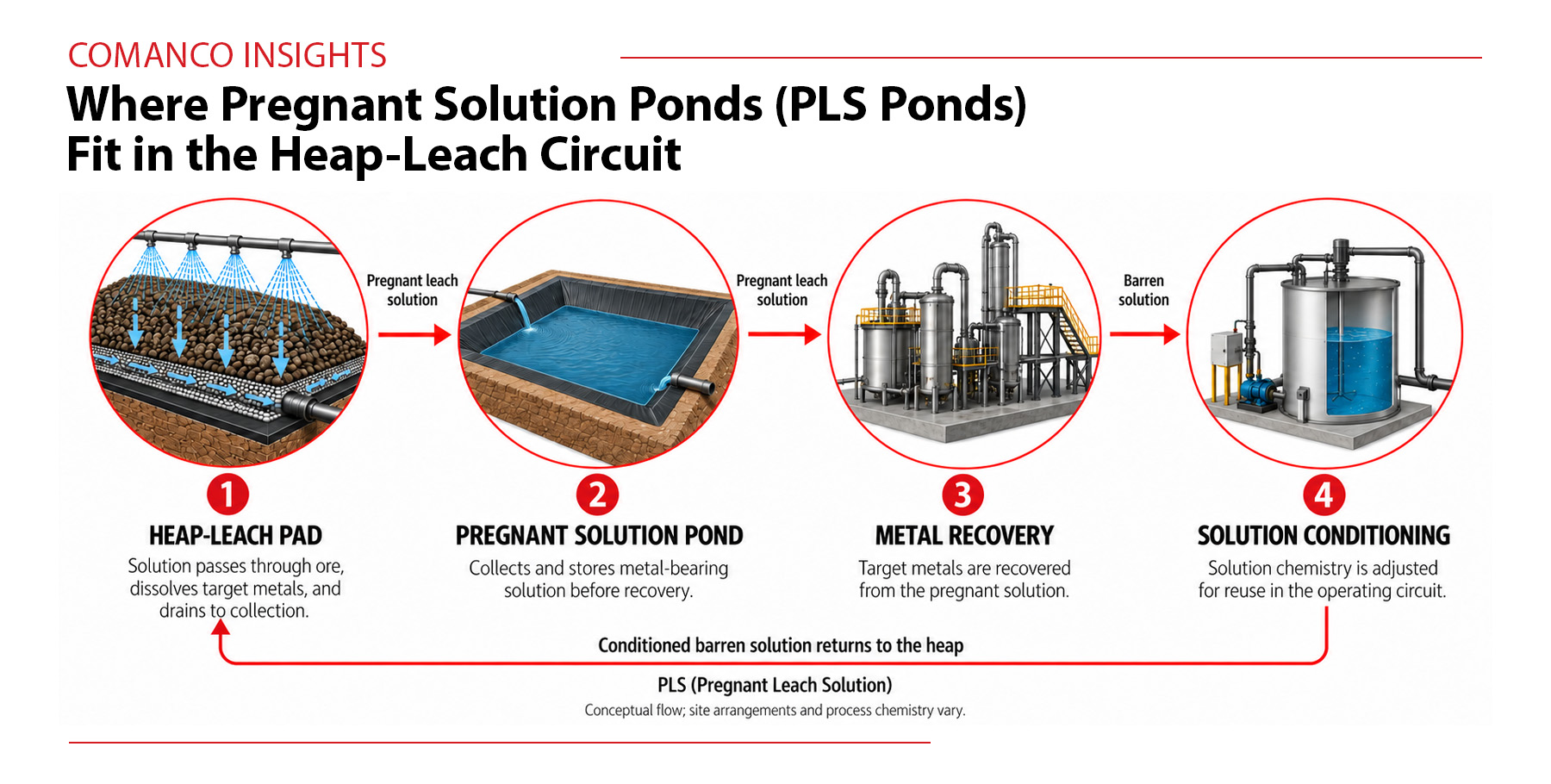
Where the Pond Fits in the Heap-Leach Circuit
A pregnant solution pond is a lined process pond that receives metal-bearing liquid collected from a heap-leach pad. As leaching solution moves through the ore, it dissolves target metals. Collection piping or lined channels then convey this pregnant leach solution, or PLS, toward the pond and downstream recovery facilities.
The pond provides storage that helps operators manage flow between the heap and the recovery plant. In many gold and copper heap leach operations, pregnant solution ponds, often called PLS ponds, serve as a critical link between mineral extraction and metal recovery. Proper containment, inspection, and maintenance help ensure valuable process solution remains within the engineered system while supporting environmental compliance.
Its purpose differs from a tailings facility, which manages residues from mineral processing. A separate storm-event pond may provide additional capacity for designated flows under the site’s solution-management plan.
Pregnant Solution Versus Barren Solution
Pregnant solution carries dissolved target metals into the recovery process. After recovery, the liquid contains less of those metals and is commonly called barren solution. Depending on the circuit, operators condition and recirculate it through the heap.
Process chemistry varies. Gold and silver heap-leach operations commonly use cyanide solutions, while many copper operations use acidic solutions. These differences affect material compatibility and containment requirements.
Both pregnant and barren solutions require appropriate containment. Barren solution can still contain process chemicals and dissolved metals.
What Makes Up the Pond’s Containment System?
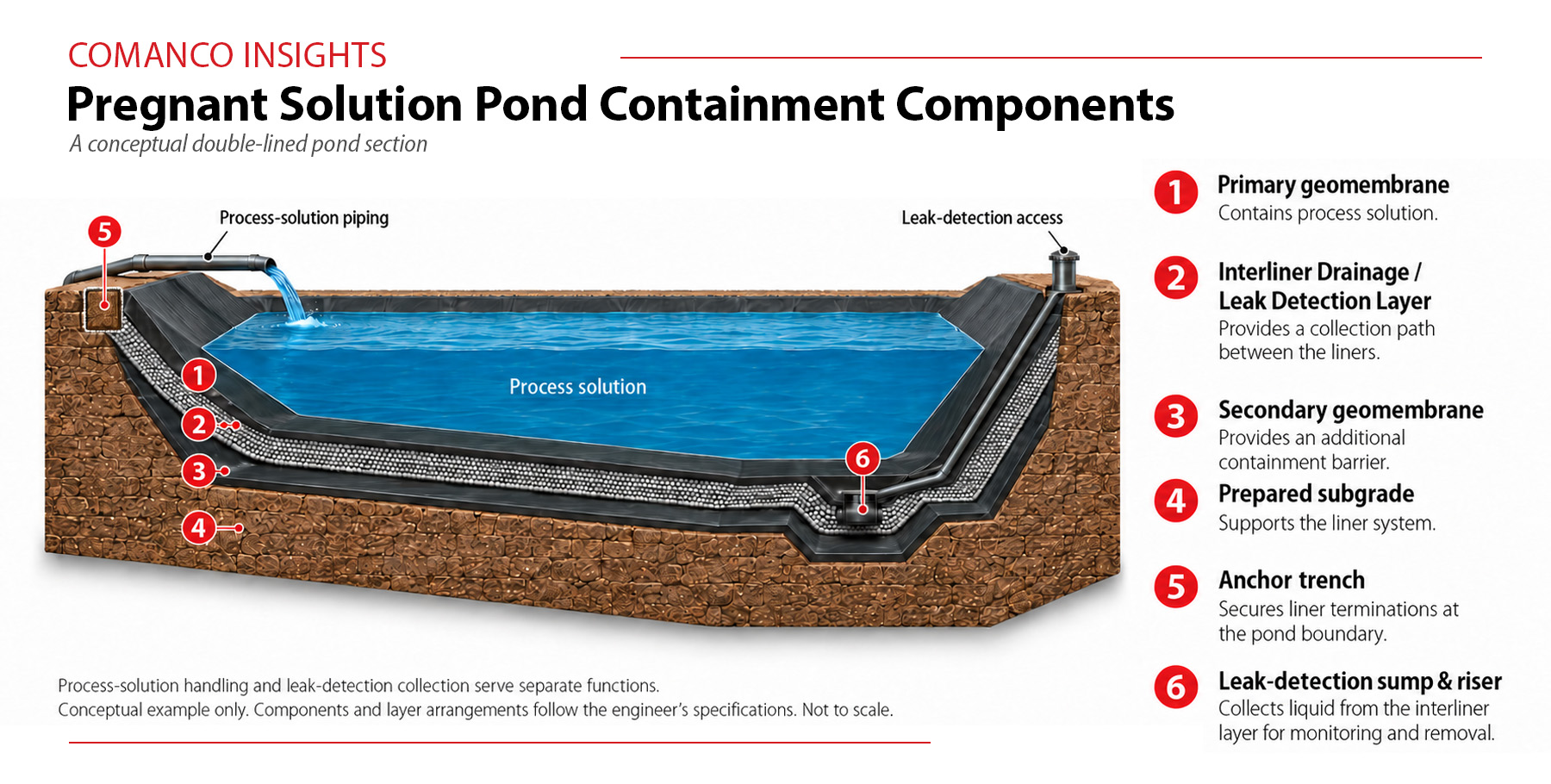
A pregnant solution pond relies on several components working together. Their arrangement varies with site conditions, process chemistry, operating needs, and regulatory requirements. The engineer of record specifies which components are needed and how they connect.
Prepared subgrade. The subgrade provides the specified supporting surface, free of protrusions or irregularities that could damage the materials above it.
Geomembrane liner. The geomembrane forms a low-permeability barrier that contains process solution. Material type and thickness follow the engineer’s specifications.
Geotextile. A geotextile may cushion the geomembrane, separate materials, or provide filtration, depending on its location and specified purpose.
Geonet or drainage geocomposite. These materials provide a pathway for liquid within a specified drainage or leak-collection layer.
Secondary liner and leak-detection system. Where included, these components provide an additional barrier and a means to collect and monitor liquid passing through the primary liner.
Piping and sumps. Pipes and sumps convey or collect liquid. Process-solution handling and leak-detection collection serve separate functions within the system.
Penetrations, boots, and structural connections. These details maintain containment continuity where the liner meets pipes, concrete structures, or other features.
Anchor trenches and terminations. These features secure the liner at pond boundaries and connection points according to approved details.
Protective materials. Specified protective materials help protect designated areas from construction or operating conditions, including equipment contact and maintenance activity.
These components are not interchangeable. A geotextile may protect a geomembrane, but it does not replace the containment barrier. Likewise, a drainage layer needs a defined collection path to function as intended. Installation crews must understand both the individual details and how the completed system fits together.
How Engineering Requirements Become a Constructible Pond
Decisions That Remain With the Engineer of Record
The engineer of record establishes the pond’s design, calculations, material selections, and technical specifications. Those decisions account for site conditions, process chemistry, operating needs, and applicable regulatory requirements.
The engineering team evaluates storage capacity, expected solution flows, stormwater contributions, and heap drain-down during pumping interruptions. It also establishes freeboard requirements to maintain space above the design liquid level. Foundation conditions, settlement, slope stability, and potential groundwater uplift require engineering evaluation, along with liner compatibility and the arrangement of drainage and leak-detection components.
These requirements give construction teams a defined basis for installation and quality checks. Field conditions that differ from the approved plans need review before affected work proceeds.
Where Contractor Experience Contributes
COMANCO contributes practical knowledge of how crews handle, install, test, and repair containment systems. Through liner installations, inspections, repairs, and recurring maintenance work at active mining facilities, COMANCO crews regularly observe how construction details affect long-term accessibility and maintainability. Features such as pipe penetrations, leak-detection components, and sump configurations often require early coordination to ensure they can be safely inspected and serviced throughout the life of the facility.
For example, a pipe connection needs sufficient working room for crews to install the liner boot and perform the specified testing. Nearby structures, pipe supports, or the installation sequence can restrict that access. Raising the issue before construction allows the project team to resolve it while adjustments are easier to coordinate.
The contractor can explain the field constraint and propose an installation approach. Any change affecting the design remains subject to the engineer of record’s review and approval. That coordination helps crews carry out the approved design while preserving access for quality checks and future maintenance.
Construction Details That Deserve Early Coordination
Prepare and Accept the Subgrade
Liner installation begins with the surface beneath it. Earthwork crews prepare the pond to the specified grades and surface conditions, addressing protrusions, debris, ruts, or soft areas before liner placement.
The liner installer and designated quality personnel review the receiving surface according to the project’s acceptance procedures. The installer’s acceptance of that surface does not replace required geotechnical testing or engineering evaluation of the foundation.
Timing matters, too. Rain, construction traffic, or other activity can disturb an accepted area. Teams need to protect the prepared surface and arrange another review if its condition changes before installation.
Plan Material Handling, Deployment, and Welding
Crews check delivered materials against approved submittals and inspect them for damage. Clear roll identification, suitable storage, and planned handling help preserve material condition and maintain traceability as installation progresses.
Panel deployment requires coordination with site access, adjacent work, and weather. Wind, moisture, and temperature changes can affect handling and welding. Crews account for thermal movement and maintain clean, dry welding surfaces within the project’s installation requirements.
The deployment sequence should also preserve access for seam testing and detailed work. Installing a large area quickly offers little benefit if the sequence leaves a connection difficult to reach or blocks an inspection point.
Coordinate Connections and Protect Completed Work
Piping, liner, earthwork, and quality teams need a shared understanding of when each detail will be ready. Check pipe positions, supports, sumps, and structural connections before surrounding work limits access. Field discrepancies must be resolved through the project’s review process before crews alter approved details.
Coordination is especially important where one layer will conceal another. Required inspections and testing must occur before placing the next layer or protective material.
Completed liner also needs protection as other trades continue working. Designated access routes, controlled material staging, and approved protection methods help prevent damage from equipment, tools, and piping activities. Clear responsibility for protecting finished areas keeps installation quality from being undermined by later work.
Verify the Installation Before the Pond Enters Service
Contractor Quality Control and Construction Quality Assurance
Construction quality control, or QC, covers the contractor’s checks during installation. For geomembranes, these include visual inspections, trial welds, and seam testing according to project specifications.
Construction quality assurance, or CQA, verifies that construction meets the approved plans and specifications. The owner’s designated engineer or quality team typically performs this work. The project’s quality plan defines each party’s responsibilities, inspection requirements, and acceptance criteria.
Testing methods serve different purposes. Nondestructive tests check seam continuity, while destructive samples evaluate peel and shear performance. Repair identified defects and perform applicable retesting before acceptance. Where specified, an electrical leak-location survey provides an additional check using a method suited to the installed system.
Build a Useful Construction Record
Material records, panel and seam maps, test results, repair locations, photographs, and approved field changes give operations teams a reference for future inspections and maintenance. These records help crews locate previous work and understand the materials and details involved when planning repairs.
COMANCO provides construction and QC documentation within its scope. Final acceptance and authorization to place the pond in service follow the project’s requirements and assigned approval responsibilities.
Protect the Liner During Pond Operations
Once a pond enters service, protecting the liner becomes part of routine operations. Conditions change as liquid levels rise and fall, equipment moves, and the system remains exposed to process solution and weather.
Chemical exposure and temperature can affect geomembrane performance over time. Operators should manage the pond within its established operating limits and submit proposed changes in process chemistry or temperature for review through the site’s procedures.
Thermal movement, settlement, and fluctuating liquid levels can change the stresses on the liner and its connections. Exposed areas also face sunlight, wind, and weather. These conditions deserve attention during inspections, particularly around penetrations, structural connections, and terminations.
Equipment activity requires coordination. Before placing or moving pumps, hoses, piping, or cleaning equipment, teams should confirm the approved supports, access routes, and protective measures. Maintenance work can damage an otherwise sound liner if equipment drags across it or concentrates loads in an unprotected area.
Sediment accumulation can obscure the liner and complicate inspection and cleaning. Planning for removal before access becomes difficult helps operations teams coordinate the work with qualified maintenance personnel. Access controls and any specified wildlife-protection measures also need upkeep as part of the pond’s operating program.
Inspect the Pond and Act on Changes
Combine Visual Observations With Monitoring
Routine inspections should combine observations of accessible areas with a review of the pond’s monitoring information. Personnel can look for visible cuts or punctures, distressed connections, displaced protective materials, erosion, and unusual liner deformation. Recording the location and photographing an observation helps the team track changes and plan follow-up work.
The inspection program should also address pond levels and available freeboard, inlet and outlet conditions, and the function of any leak-detection collection and removal equipment, according to the site’s operating plan.
A walkover only shows what is visible. Liquid, sediment, and covered details can conceal conditions that require planned access or specialized evaluation. Visual inspections therefore complement leak-detection monitoring and other checks required by the site’s operating plan.
Many mining operators incorporate regular liner inspections and maintenance into their containment management programs. Through recurring inspection and repair work at mining facilities, COMANCO has observed that early identification of small issues often helps operators address concerns before they develop into more complex repairs.
Investigate Warning Signs in Context
Unexpected leak-detection readings require evaluation against the site’s baseline, recent operating conditions, and established response criteria. Liquid collected between liners can indicate leakage through the primary liner, but it does not, by itself, establish a release beyond secondary containment.
Operators should follow the site’s response procedures, involve the appropriate technical personnel, and document the investigation and corrective action. Visible damage or monitoring changes should receive follow-up even when the cause is not immediately clear.
Inspection frequency depends on permit requirements, the operating plan, and site conditions. Significant weather events, maintenance work, or operational changes may warrant additional checks. Records should identify the inspection date, who performed the inspection, and what they observed. They should also document any corrective actions, who completed them, and when each issue was resolved.
Plan Maintenance and Liner Repairs Around the Operating Circuit
Prepare for Access, Cleaning, and Repairs
Repair planning starts with solution management. Before lowering the pond level, the operations team needs to confirm how it will manage the existing inventory and any continuing flow from the heap. Drawdown, isolation, and temporary storage arrangements must follow the site’s approved procedures and operating limits.
Lowering the liquid level does not automatically make the pond safe to enter or ready for repair. The team must establish safe access, evaluate remaining hazards, and coordinate cleaning. Cleaning methods need to protect the liner while addressing the handling of recovered solution and sediment under site requirements.
Once the affected area is accessible, qualified personnel can assess the liner and determine whether the proposed repair method suits its material and condition. Changes affecting the containment design require review by the engineer of record.
Completed repairs need the specified testing and documentation. Returning the affected area to service follows the project’s acceptance requirements and assigned approval responsibilities.
Prepare for Unplanned Repair Needs
Current drawings, material records, repair histories, and clear contact responsibilities help teams respond when unexpected issues arise. Knowing who will coordinate operations, technical review, access, and repair work reduces uncertainty during mobilization.
COMANCO’s work at a Nevada mining operation included liner repairs and batten-bar installation, supported by recurring inspections of leachate ponds and preg-ponds.
Urgent repairs still require appropriate review, qualified personnel, and verification. Established contingency arrangements help the team organize those steps while managing the operating circuit.
Questions Mine Owners and Project Managers Should Ask
Before construction begins or maintenance work is scheduled, mine owners and project managers can ask a few focused questions to clarify responsibilities and identify coordination gaps.
- Are design, installation, QC, CQA, and acceptance responsibilities clearly assigned?
- Can crews reach critical connections to install, test, inspect, and repair them?
- Who protects completed liner when piping crews, equipment operators, or other trades enter the area?
- Are monitoring points accessible, and does the operating team know when and how to escalate a change?
- How will incoming solution and pond inventory be managed during planned maintenance or an unplanned repair?
- Can operations and repair personnel access current drawings, material information, test results, and repair records?
Discussing these questions with the engineer, construction team, quality personnel, and mine operations helps resolve coordination issues before they affect fieldwork.
Carry Containment Quality Into Everyday Operations
A pregnant solution pond’s performance depends on decisions made before its first fill and the attention it receives throughout operation. The engineered design establishes the requirements. Careful construction puts them into practice, while inspections and maintenance help teams identify and address changing conditions.
For mine owners, the practical lesson is to plan construction and maintenance together. Accessible connections, protected liner, maintained monitoring systems, and usable records support the people responsible for the pond. Keeping engineering, construction, and operations coordinated helps protect the surrounding environment, preserve mineral-bearing solution, and support operational continuity.
SAFETY ★ QUALITY ★ SERVICE
COMANCO is an environmental, commercial, and civil construction company specializing in constructing containment facilities.
Our teams provide containment construction, geomembrane installation, HDPE piping, liner inspection, maintenance, and repair. Contact COMANCO to discuss your construction or maintenance needs and coordinate field support with your operations team and engineer of record.
📍 4301 Sterling Commerce Dr, Plant City, FL 33566
📞 (813) 988-8829
🌐www.comanco.com