
COMANCO Continues Large-Scale Liner Installation at Louisiana Phosphate Facility
Liner installation at an active phosphate facility presents unique challenges beyond standard containment work. These environments require strict control of material handling, water management, and sequencing between multiple contractors. Misaligned elements increase the risk to containment performance.
At active facilities, work areas are often shared. Crews must operate alongside earthwork teams, material handlers, and site operations that continue during construction. Subgrade conditions can change quickly. Surface water can impact prepared areas. Crews must execute tie-ins to existing systems without compromising integrity.
If these challenges are not addressed properly, the consequences can be significant. Poor coordination can lead to delays, rework, or damage to installed liner. Inconsistent subgrade conditions can affect liner performance. Improper tie-in welding can create long-term leak risks. These issues can affect compliance and increase the owner’s lifecycle costs.
Operational Risks That Influence Liner Performance
Containment systems in phosphate facilities are designed to prevent process materials from impacting surrounding soil and groundwater. The liner system is a critical barrier, and its performance depends on proper installation from start to finish.
Several risks are common in these environments:
Subgrade Instability
Subgrade must remain smooth, compacted, and free of debris prior to liner placement. In active sites, maintaining these conditions can be difficult due to traffic and weather exposure. Without proper maintenance, defects can form beneath the liner.
Surface Water Management
Water control is a constant concern. Rain events or poor drainage can introduce moisture into the work area, affecting both subgrade integrity and liner installation conditions.
Tie-In Complexity
Connecting new liner to existing systems requires precision. These tie-ins often occur in constrained areas and require proper surface preparation, alignment, and welding to maintain system continuity.
Multi-Contractor Coordination
Work rarely occurs in isolation. Earthwork, material staging, and installation activities must be sequenced correctly to avoid conflicts and maintain progress.
Ignoring these risks can result in compromised containment systems that require costly repairs or create long-term environmental concerns.
Executing Liner Installation with Consistency and Control
Experienced contractors approach liner installation in active facilities with a focus on planning, adaptability, and quality control.
Maintain Subgrade Conditions
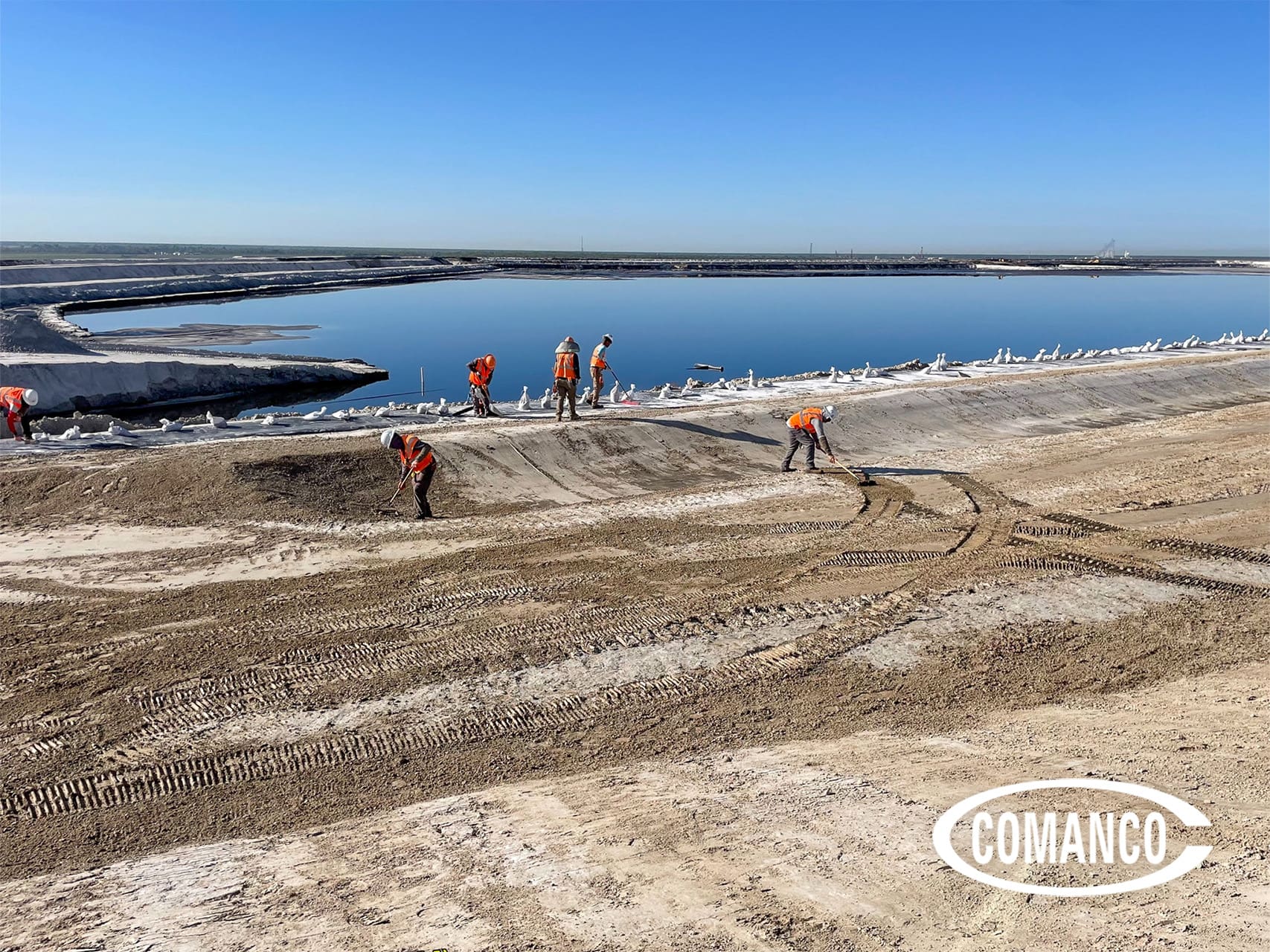
Subgrade preparation is not a one-time task. It requires ongoing inspection and maintenance leading up to liner placement. Crews must recondition areas as needed to meet specifications.
Control Water at All Times
Effective surface water control measures must be in place throughout installation. This includes managing runoff, preventing ponding, and protecting prepared areas from saturation.
Execute Precise Tie-Ins
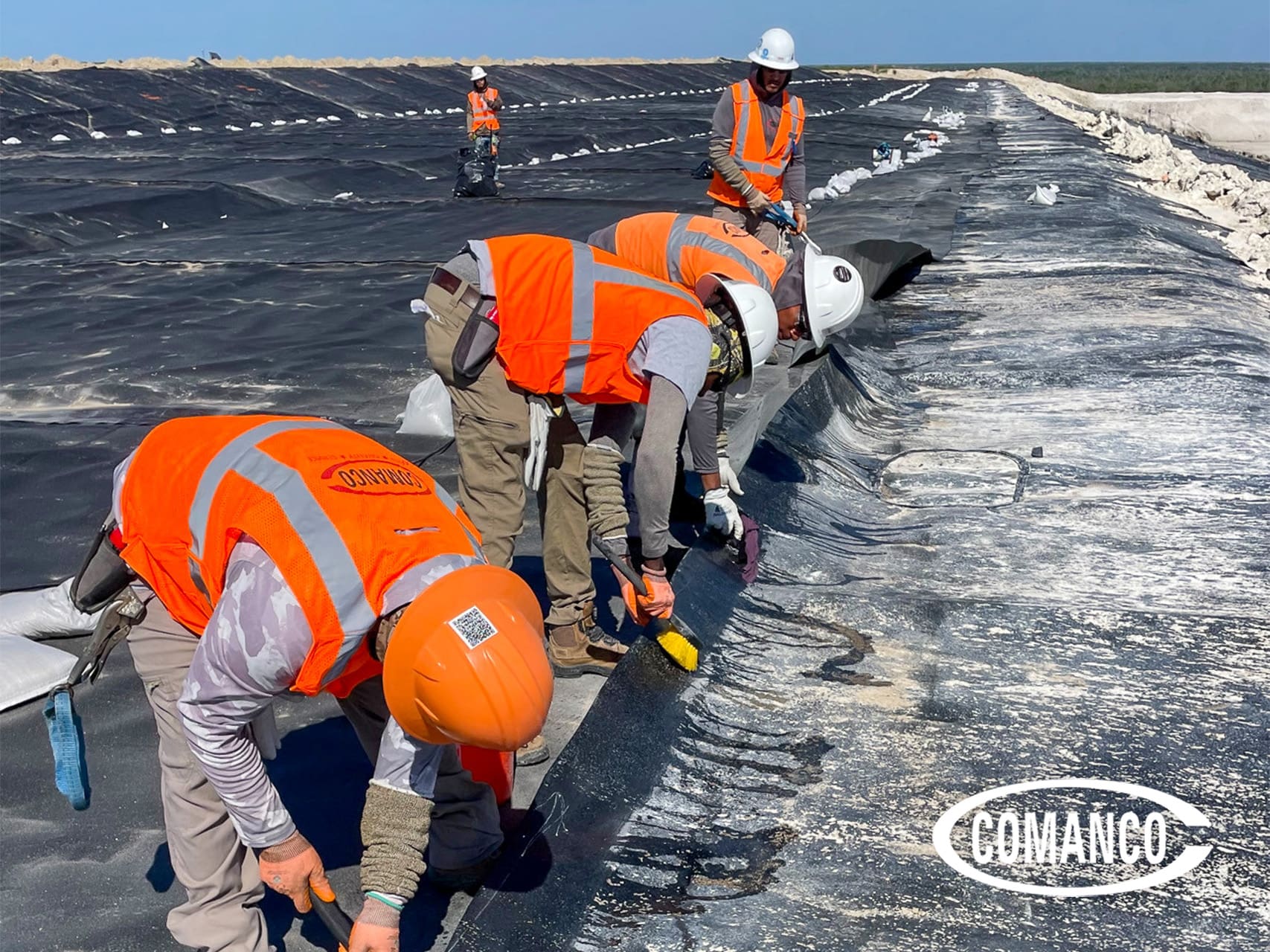
Tie-in welding requires clean surfaces, proper alignment, and strict adherence to welding procedures. Quality control testing must confirm seam integrity before work progresses.
Coordinate Daily with Other Trades
Consistent communication between contractors helps maintain workflow and prevents conflicts. Daily planning ensures that each phase of work supports the next.
Adapt to Changing Conditions
Active sites require flexibility. Crews must adjust sequencing and work areas based on site conditions while maintaining safety and quality standards.
Field Execution Guided by Experience
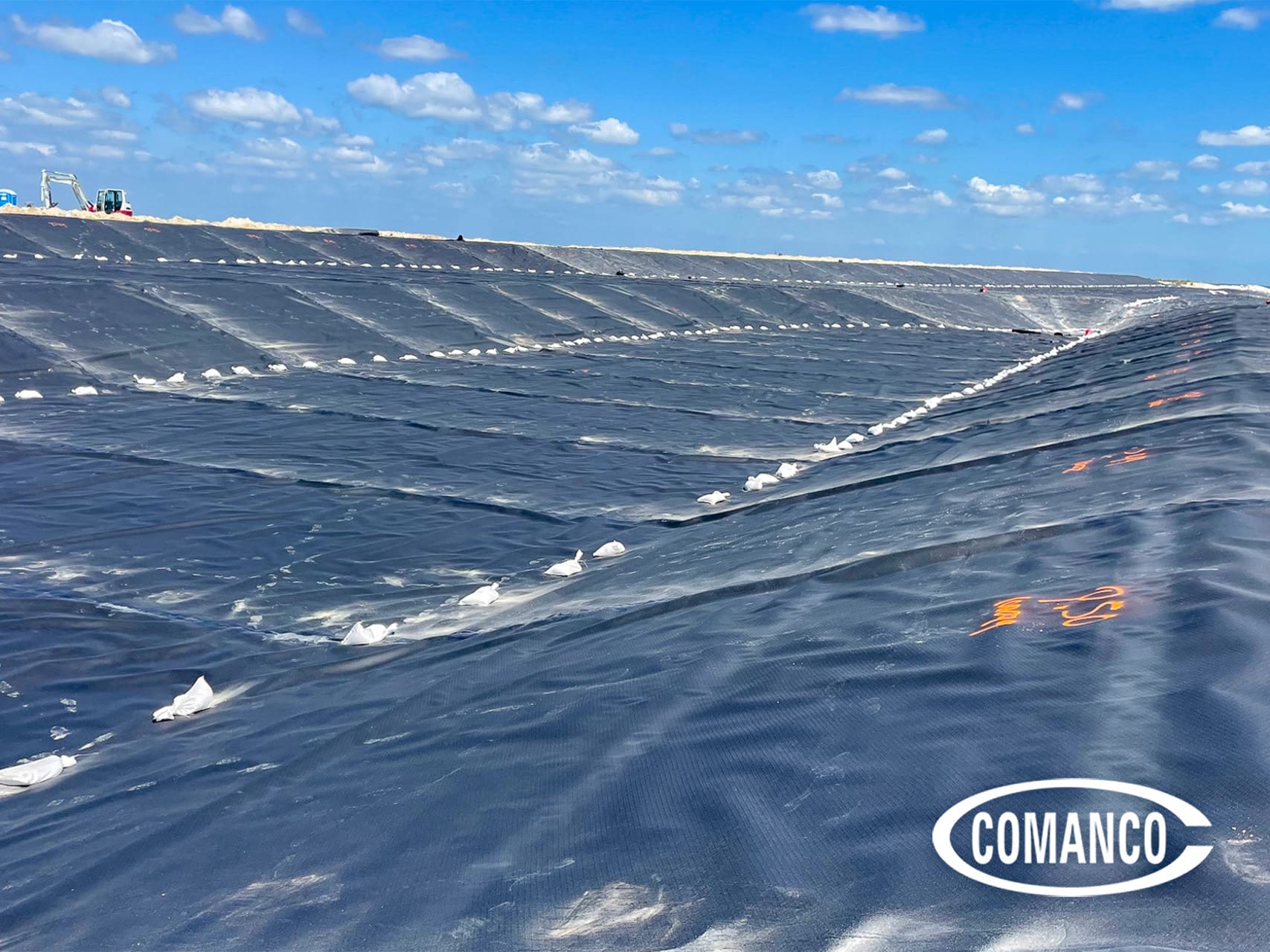
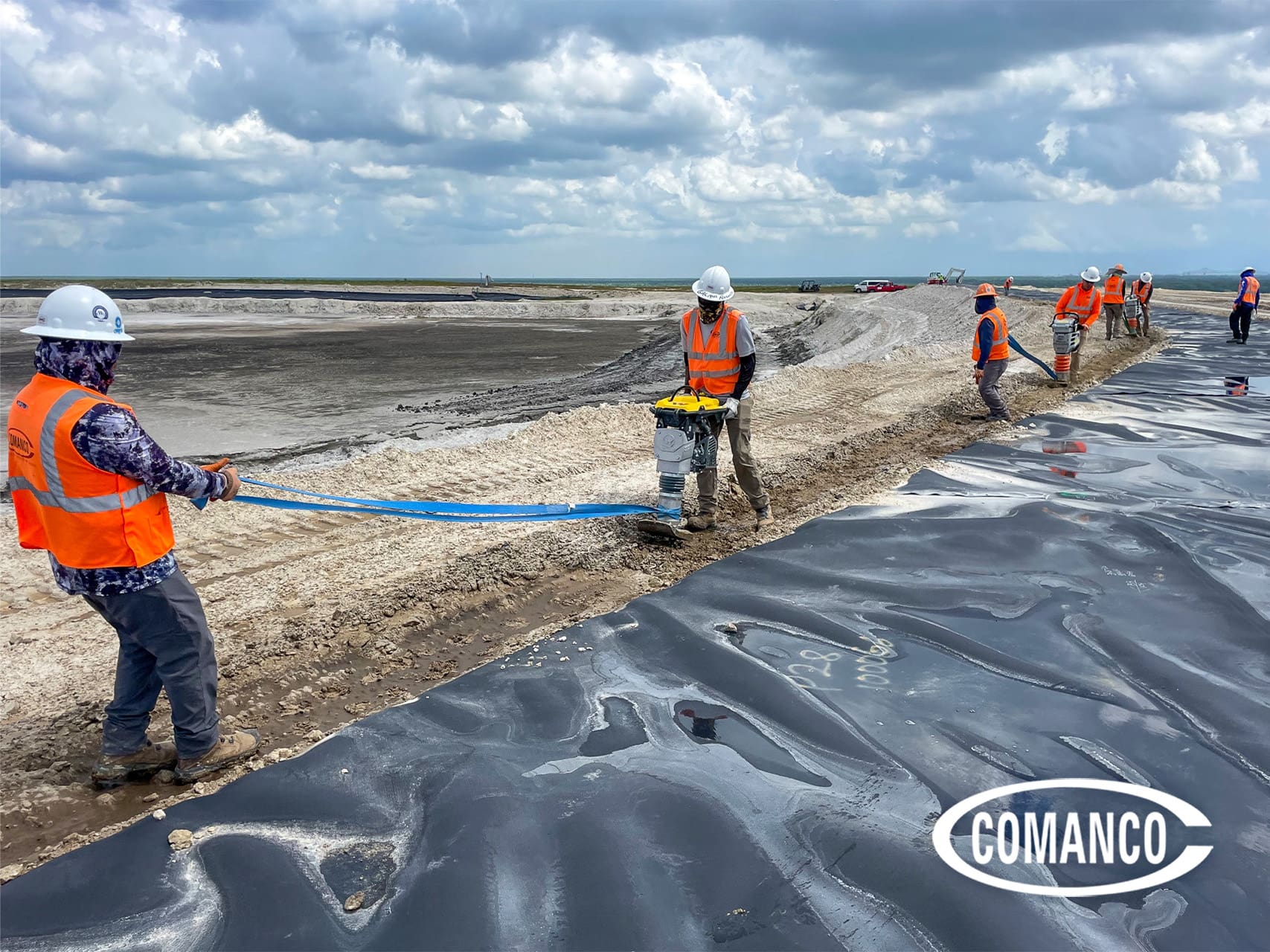
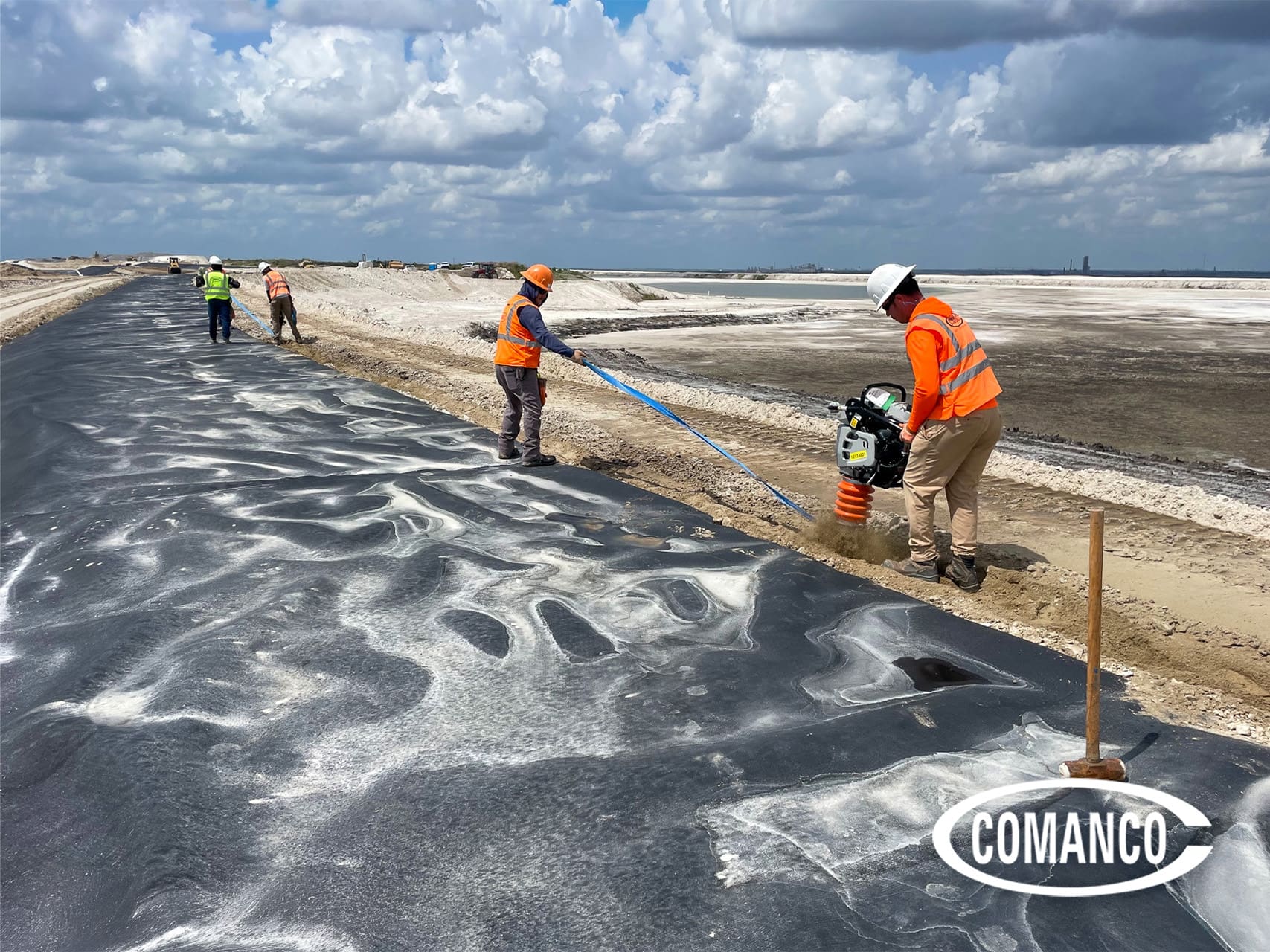
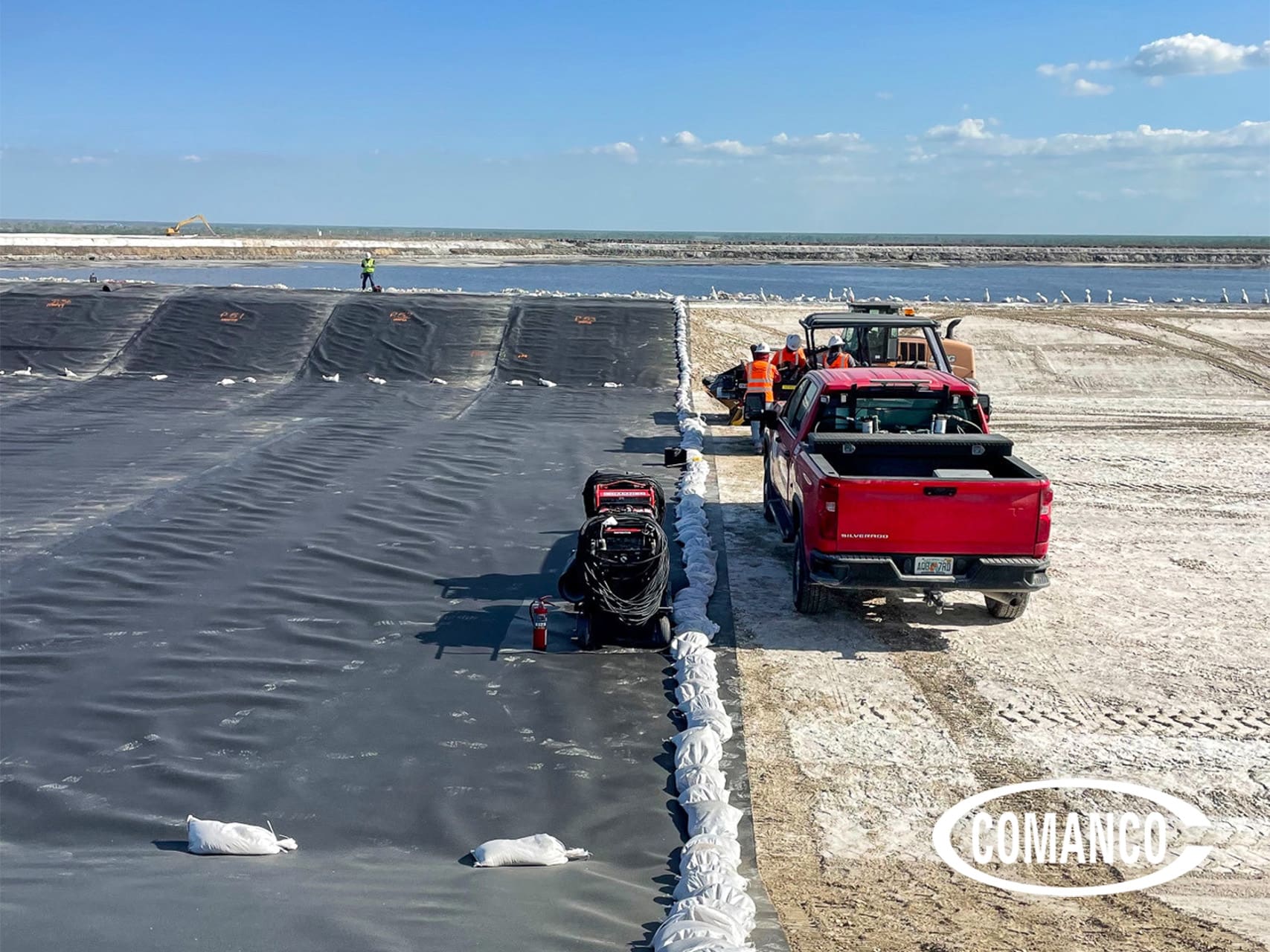
On a recent phosphate facility project in Louisiana, COMANCO is executing a large-scale liner installation while working within an active site environment. The project includes the installation of over 800,000 SF of 60 Mil textured HDPE liner supplied by AGRU America, along with more than 3,500 LF of tie-in welding and anchor trench construction.
The team is completing the work in multiple mobilizations to align with site conditions and project sequencing. The first mobilization focused on initial installation and coordination with ongoing operations. The team is now preparing for a second mobilization to continue progress as additional areas become available.
Maintaining subgrade conditions has been a continuous effort. Crews are actively reconditioning surfaces and ensuring areas meet specification prior to liner placement. Surface water control measures are in place to protect work areas and maintain installation quality.
Tie-in welding is being executed with careful preparation. Existing liner is exposed and cleaned before welding to ensure proper bonding. The team treats each connection as a critical component of the overall containment system.
Coordination has been a key factor in maintaining progress. The COMANCO team is working closely with other contractors on site to manage staging, material movement, and access to work areas. This level of communication helps reduce downtime and supports a steady workflow.
Under the direction of Superintendent Martin Calderon Sr., the crew continues to prioritize safety and execution. The project has progressed without incident, reflecting a strong commitment to jobsite safety and disciplined work practices.
Building Containment Systems That Perform
The purpose of this work is straightforward. The liner system is designed to contain phosphate materials and prevent them from impacting the surrounding environment. Achieving that goal requires more than installing material. It requires attention to detail at every stage of construction.
Projects like this highlight the importance of doing the work right the first time. Proper subgrade preparation, effective water management, precise welding, and strong coordination all contribute to long-term performance.
In active industrial environments, these factors are not optional. They are necessary to ensure that containment systems function as intended and continue to meet regulatory and operational expectations.
COMANCO approaches each project with this mindset. By focusing on execution in the field, the team delivers containment systems that support both immediate project goals and long-term environmental protection.
SAFETY ★ QUALITY ★ SERVICE
COMANCO is an environmental, commercial, and civil construction company specializing in constructing containment facilities.
Successful liner installation in active phosphate facilities depends on coordination, consistent subgrade preparation, and strict quality control. When crews manage water, sequencing, and tie-ins effectively, they reduce risk and support long-term containment performance. Projects like this demonstrate how disciplined execution in the field protects both the system and the surrounding environment.
Contact COMANCO to learn how our team approaches complex containment projects with a focus on safety, quality, and reliability.
📍 4301 Sterling Commerce Dr, Plant City, FL 33566
📞 (813) 988-8829
🌐 www.comanco.com