
Constructing a Landfill Cell in Palm Beach County During Florida’s Rainy Season
How COMANCO Constructed a New Landfill Cell and Temporary Overlay Liner for the Palm Beach Solid Waste Authority
Landfill expansion projects involve multiple phases of earthwork, liner installation, and piping that require careful coordination. In South Florida, managing changing weather conditions is an important part of keeping work moving safely and maintaining quality in the field.
Landfill cell construction is one of the most critical components of modern solid waste management. New cells must provide reliable environmental containment, manage leachate and landfill gas, and support long-term regulatory compliance. As communities continue to grow, landfill operators depend on properly engineered expansion projects to maintain disposal capacity while protecting environmental resources.
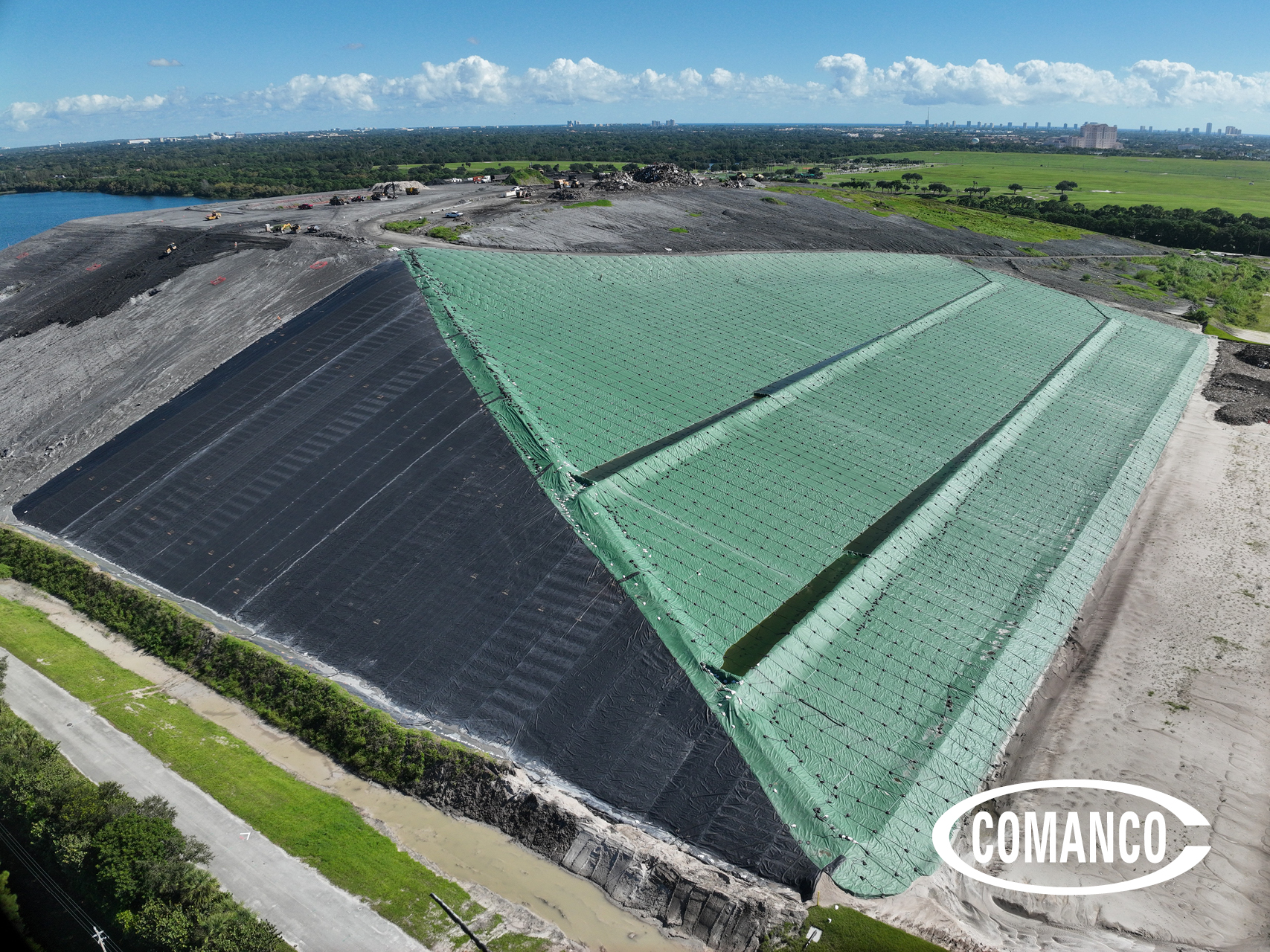
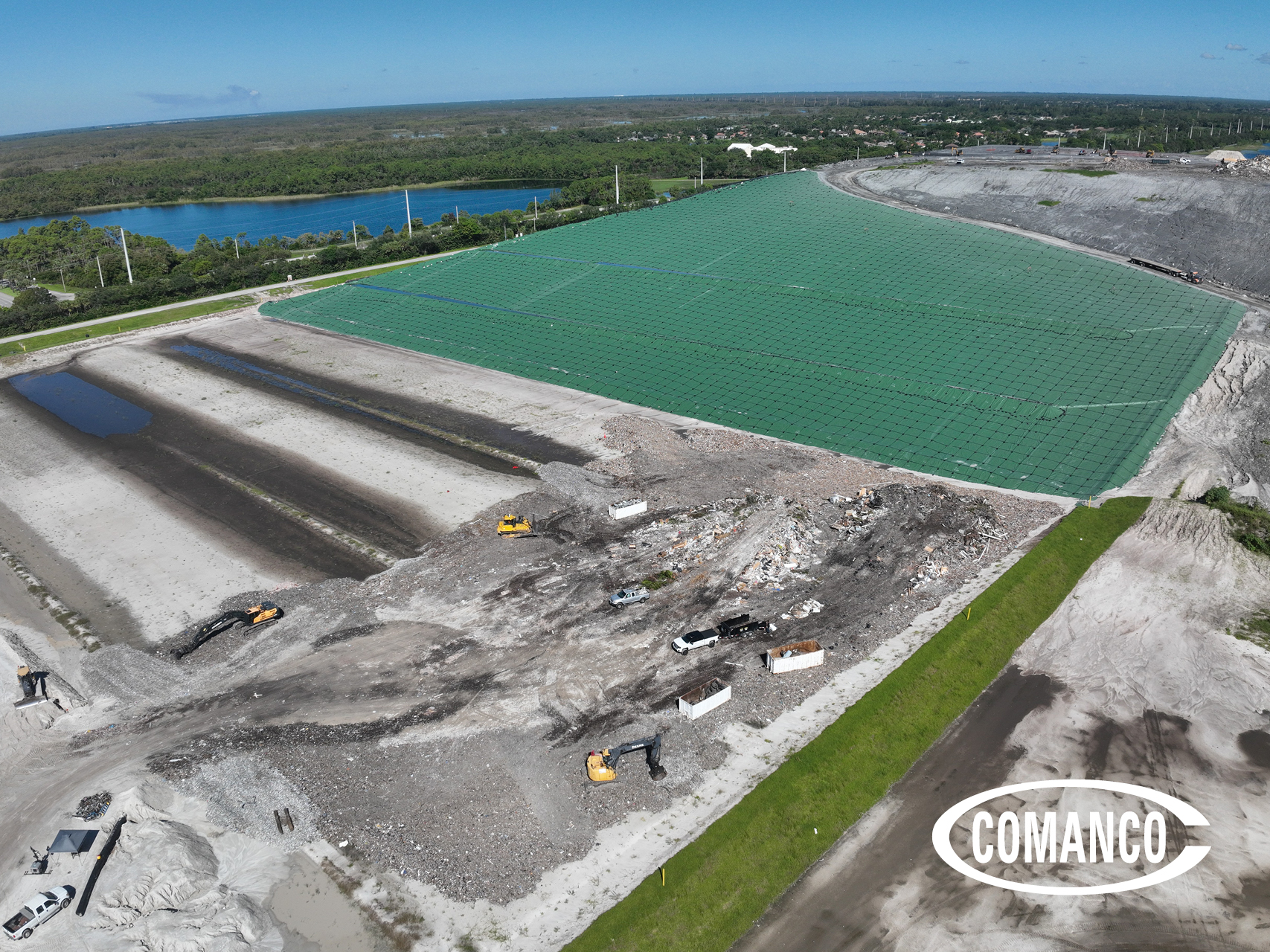
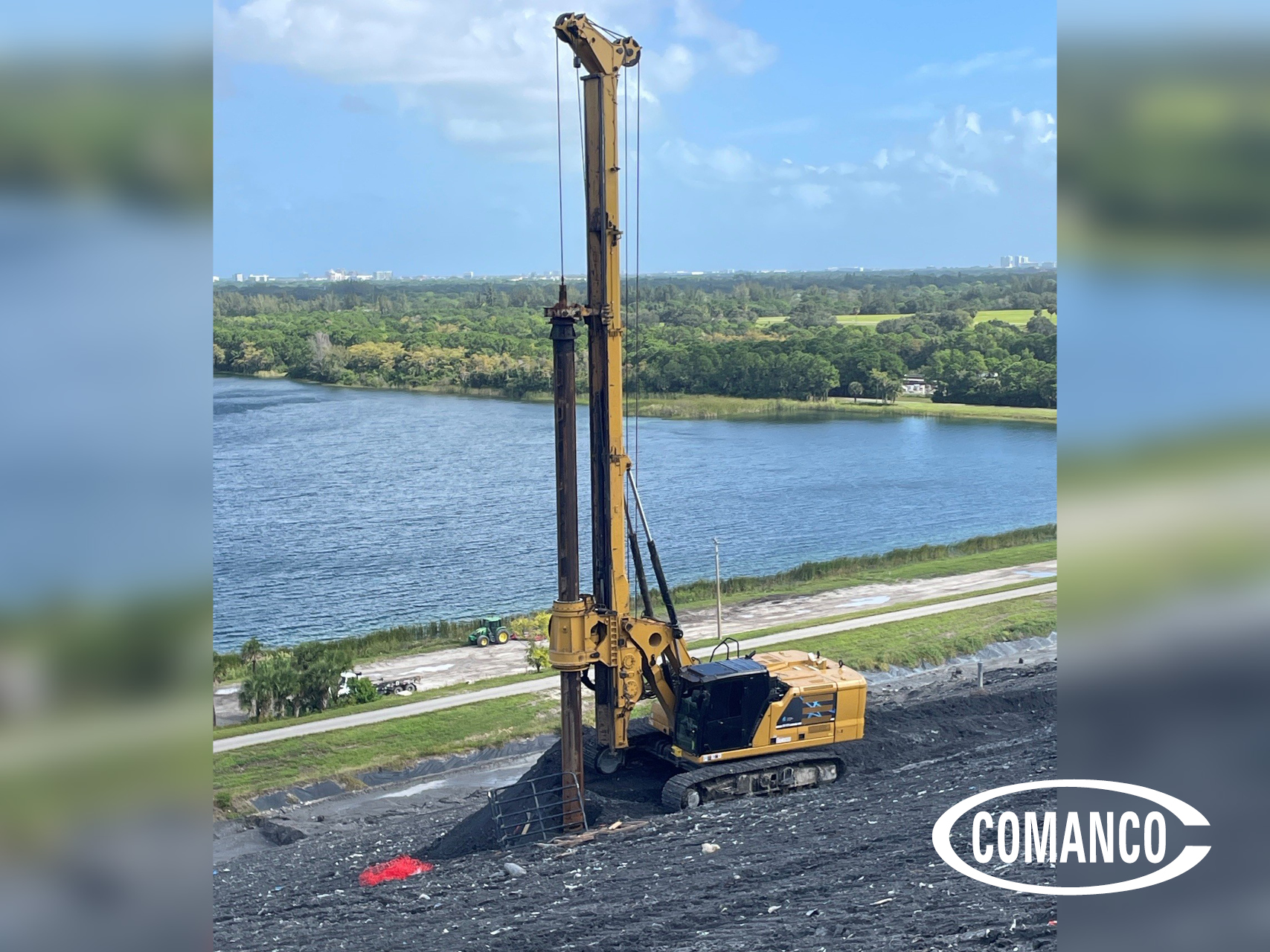
On a recent landfill expansion and temporary closure project at Solid Waste Authority (SWA) in Palm Beach County, our crews built a new lined cell and tied it into a temporary overlay liner across an existing waste slope. Here is what that work demands and what we learned in the field.
Why Landfill Cell Construction Leaves Little Room for Error
A landfill cell is a containment system. Once waste goes in, there is no practical way to go back and fix what is underneath. Proper subgrade preparation, precise liner installation, and secure tie-ins are essential to the long-term performance and reliability of the containment system.
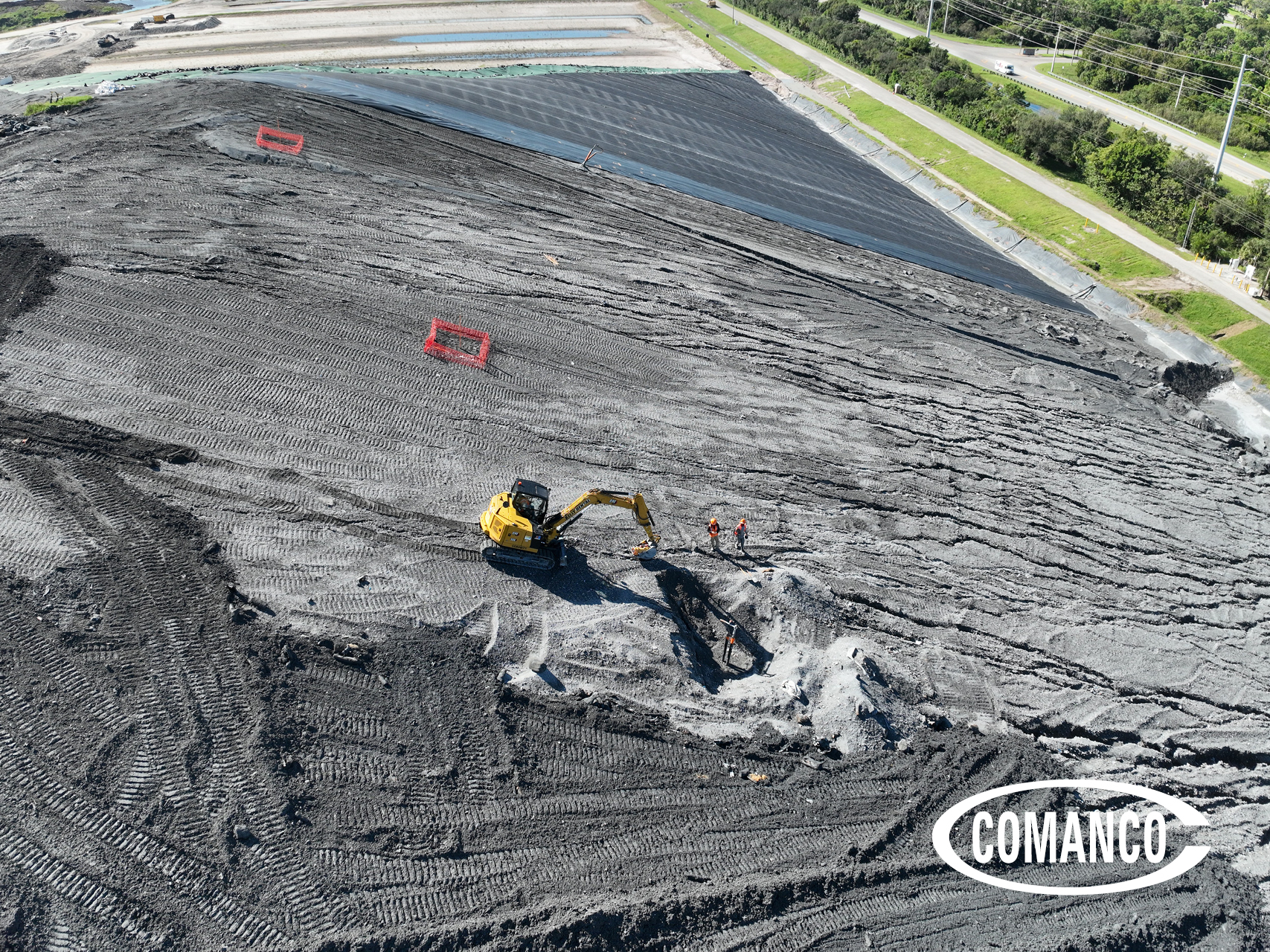
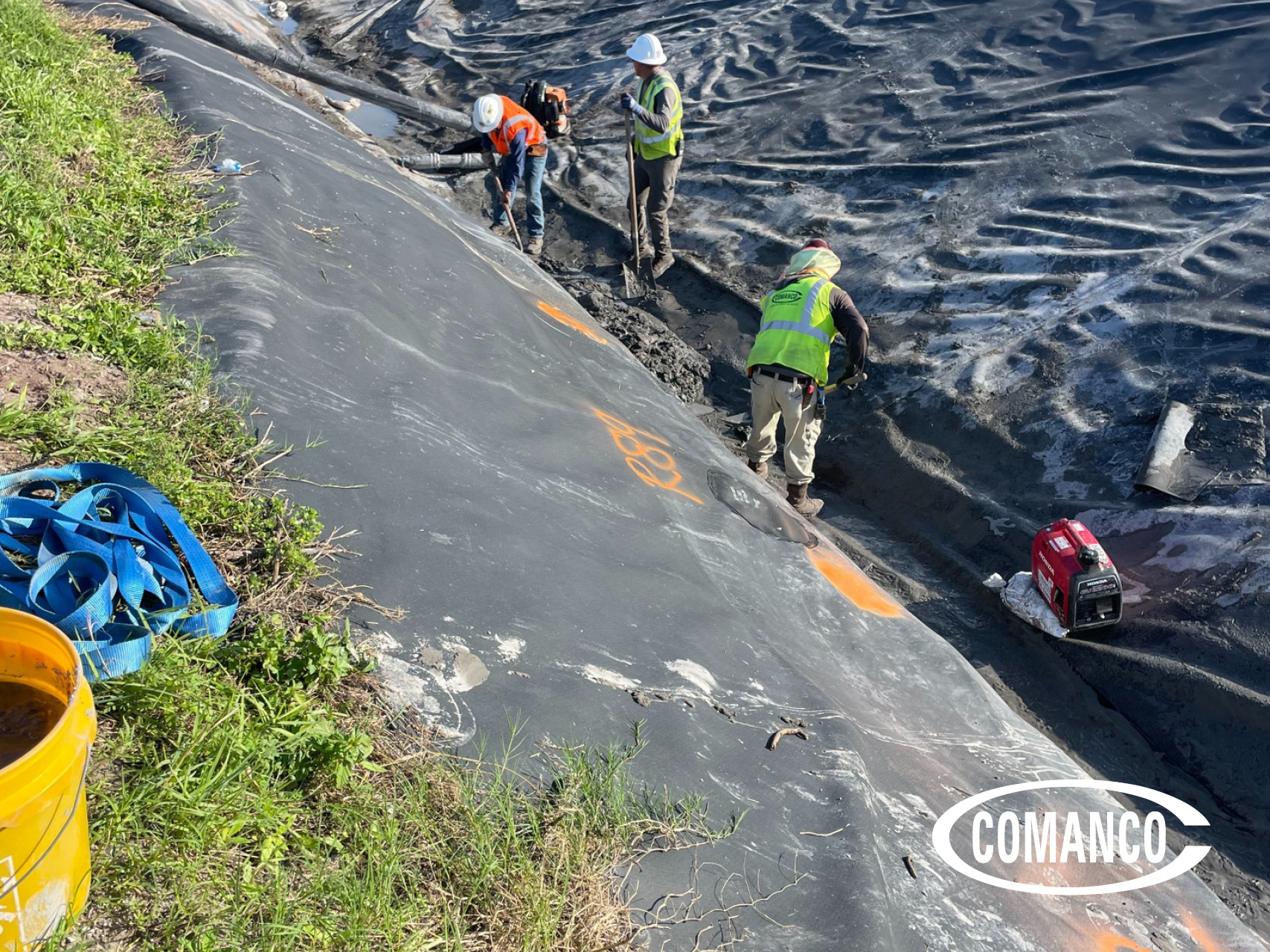
Overlay work requires careful coordination and precise installation to ensure the system performs as intended. A temporary overlay liner has to connect to the expansion cell, manage stormwater off the slope, and coexist with the gas collection system. That means precise detailing at every transition.
The Challenge: Rain, Lightning, and a Detail-Heavy Design
Wet weather was our biggest obstacle. South Florida’s rainy season creates unique challenges for landfill construction projects. Frequent storm events, lightning delays, and saturated soils can impact earthwork operations, liner deployment, and project sequencing. Successful landfill contractors must continually adjust schedules, protect completed work, and take advantage of limited weather windows to maintain production without sacrificing quality.
Subgrade preparation depends on dry, stable soil, and liner deployment depends on dry surfaces and safe conditions. Frequent rain and lightning kept pushing both off schedule.
The design also called for close attention. The geosynthetic details, including rain flaps on the overlay, required coordination between the field crews and the engineering team to build exactly as intended. Rain flaps help manage stormwater and protect the areas beneath the overlay liner.
How Experienced Contractors Handle It
Good field execution starts with respecting the weather. Crews should stand down for lightning every time, then be ready to move when conditions clear. Sequencing matters too. Prepare only as much subgrade as can be covered and protected, and keep stormwater from undermining finished work.
Quality control has to match the pace. Third-party testing, documented installation, and thorough inspection of piping are what give owners and regulators confidence that the system will perform as designed.
How COMANCO Approached This Project
The scope covered earthwork, geosynthetics, and piping for both the new cell and the overlay. We installed approximately 1.56 million square feet of 60-mil HDPE liner and 450,800 square feet of 30-mil HDPE liner. The 30-mil liner served as the temporary cover on the overlay, and 40-mil liner was used on the west side of the overlay. The cell build also included GCL, geocomposite, geonet, and geotextile, along with more than 10,000 linear feet of HDPE pipe for the gas and leachate collection systems.
Protective cover placement was a major logistics effort. The crew managed more than 5,000 loads of protective cover sand, about 115,000 tons in all, plus roughly 3,400 tons of river gravel.
The volume of materials installed on this project demonstrates the scale and complexity of modern landfill expansion projects. From geosynthetics and piping systems to protective cover placement, each component plays a critical role in creating a fully integrated containment system capable of supporting long-term landfill operations.
The quantities involved in this project were significant. The 1.56 million square feet of primary HDPE liner alone would cover approximately 27 football fields, including the end zones. When combined with the temporary overlay liner, COMANCO installed more than 2 million square feet of liner materials across the project.
The crew also placed approximately 115,000 tons of protective cover sand, equivalent to more than 5,000 truckloads of material, and installed more than 10,000 linear feet of HDPE pipe, nearly two miles of pipe used to collect landfill gas and leachate. These systems work together to help protect the environment while supporting the long-term operation of the landfill.
Senior Project Manager Michael Taylor and Project Engineer Alex Kusik coordinated the work between the field crews and the design requirements, which kept the overlay details and cell tie-ins on track despite the weather.
In the field, Superintendent Billy Wilson oversaw the earthwork, and Leadman Martin Alarcon kept the crews moving. Billy also trained team members to run dozers, haul trucks, and water trucks, which built depth into the crew and kept production steady when conditions allowed.
Projects of this size require close coordination between the owner, engineers, inspectors, and construction teams. Maintaining open communication throughout construction allowed COMANCO and SWA to successfully navigate weather impacts, sequencing challenges, and detailed design requirements while keeping the project moving forward.
The Result: Leak Detection Testing With Zero Leaks
Leak detection testing between the primary and secondary liner in the new cell was performed by a third-party testing firm. It found no leaks. For landfill owners and operators, leak detection testing is one of the most important quality verification measures during cell construction. Achieving a zero-leak result confirms the integrity of the liner system and provides confidence that the containment system is performing exactly as designed before waste placement begins.
A specialty contractor also pressure-washed the pipe systems and recorded video inspections inside them, with no issues found.
Results like these come from consistent subgrade prep, careful welding, and a crew that doesn’t cut corners when the weather turns.
Why Doing It Right the First Time Matters
With the new cell complete, SWA can continue placing waste in a fully engineered, monitored containment area. That supports long-term environmental protection and regulatory compliance for the community the facility serves.
A liner system gets covered up and put to work, so the quality has to be built in from the start. Careful subgrade prep, disciplined seaming, third-party testing, and crews who stand down when conditions turn are what make a clean leak detection result possible.
As Palm Beach County continues to grow, projects like this help ensure the Solid Waste Authority has the infrastructure necessary to safely manage future waste streams. Properly constructed landfill cells, gas collection systems, and leachate management systems are essential investments in long-term environmental protection and responsible solid waste management.
SAFETY ★ QUALITY ★ SERVICE
COMANCO is an environmental, commercial, and civil construction company specializing in constructing containment facilities.
Landfill expansion and closure projects demand precise liner installation and careful coordination between new cells, existing waste slopes, and gas and leachate collection systems. Whether building a new lined cell, tying into a temporary overlay, or closing out an existing landfill, COMANCO combines experienced field leadership, disciplined weather and safety practices, and rigorous quality control to support long-term containment performance and regulatory compliance.
Contact COMANCO to discuss your next landfill cell construction project, overlay or closure liner installation, gas and leachate collection piping, or landfill expansion.
📍 4301 Sterling Commerce Dr, Plant City, FL 33566
📞 (813) 988-8829
🌐 www.comanco.com