
Landfill Liner Installation & Geomembrane Containment Systems
COMANCO has installed over 100 million square feet of geosynthetic liner systems for solid waste landfills across the United States. Our IAGI-certified crews deliver compliant, fully tested installations – with complete QA/QC documentation from the first weld to final regulatory submittal.
A failed landfill liner does not just mean a repair. It means leachate in the groundwater, a regulatory violation, remediation liability, and – depending on the jurisdiction – a potential permit revocation. The liner system is the most consequential component of any landfill cell. Getting the installation right, documenting every seam, and delivering a complete as-built QC package are not optional. They are what separate a compliant facility from a liability.
COMANCO has been installing geomembrane liner systems for solid waste facilities since 1989. We work across liner types, cell sizes, and regulatory regimes – from straightforward Subtitle D municipal cells to complex double-liner hazardous waste systems. Our crews are IAGI-certified, our QA/QC process is documented in real time via proprietary GeoCAAB software, and our safety record – an EMR of 0.58 – speaks for itself.
This page covers the liner systems we install, how our installation process works, the QA/QC documentation we deliver, and what project owners need to know before going to bid.
Landfill Liner Systems COMANCO Installs
The liner system specified for your landfill cell is determined by the regulatory tier, waste type, site hydrogeology, and design engineer’s judgment. COMANCO installs all standard liner system configurations used in solid waste containment – and our crews are experienced enough to work with any geomembrane material your specification requires.
| Liner System | Components | Regulatory Basis | Typical Application |
| Single composite liner | 60-mil HDPE geomembrane + minimum 2 ft compacted clay (or GCL equivalent) | 40 CFR 258.40(a)(1) – RCRA Subtitle D | Standard MSW cells; most common configuration in US municipal landfill construction |
| Double composite liner | Upper geomembrane + leak detection drainage layer + lower geomembrane + clay or GCL | RCRA Subtitle C; state-specific regulations for hazardous waste | Hazardous waste cells, industrial landfills, facilities with heightened groundwater protection requirements |
| Geosynthetic clay liner (GCL) system | Sodium bentonite-encased geotextile composite + HDPE or LLDPE geomembrane | Equivalent barrier performance to compacted clay | Sites where native clay is unavailable, expensive, or where subgrade conditions favor GCL placement |
| Leachate collection and removal system (LCRS) | Geocomposite drainage layer + perforated HDPE pipe network + sump and riser assembly | Required under 40 CFR 258.40 for all Subtitle D facilities | Installed above the primary liner in every Subtitle D MSW cell; sized for 30-cm head drainage standard |
| Landfill cap / final cover system | Low-permeability geomembrane barrier + drainage geocomposite + protective soil layer + vegetative cover | Post-closure regulations; 40 CFR 258.60 | Closed cell final cap, active landfill intermediate cover, landfill gas barrier layer under energy recovery systems |
| Composite HDPE / LLDPE specialty systems | Textured HDPE for slopes, smooth HDPE or LLDPE for flat areas; multi-layer geocomposite drainage panels | CQA plan specifications; ASTM D7176, D4437, D6392 | Large-area cells requiring optimized slope stability, leachate flow characteristics, or specific CQA testing protocols |
COMANCO does not prescribe liner systems – that is the design engineer’s role. Our job is to install the specified system correctly, test every seam to the required standard, and document everything. If you are still in the design phase, our project team can answer installation-specific questions your engineer may have about our capabilities, crew experience with a particular geomembrane type, or mobilization timeline.
Our Landfill Liner Installation Process
Landfill liner installation is not a commodity service. The quality of the installation – specifically the integrity of every seam, the accuracy of every as-built measurement, and the completeness of the QC record – determines whether the system performs for its designed life or becomes a liability within a few years. COMANCO’s installation process is built around that reality.
Pre-construction planning and coordination
Before a COMANCO crew mobilizes, our project management team reviews the CQA plan, liner specification, and panel layout drawings in detail. We generate the panel layout in GeoCAAB, our proprietary QC software, which assigns a unique identifier to every panel before installation begins. We coordinate with the design engineer and the independent CQA firm to align on inspection hold points, testing frequencies, and documentation formats. Site-specific safety orientations, ISNetworld compliance submissions, and equipment logistics are completed in this phase – not after mobilization.
Subgrade inspection and acceptance
No geomembrane goes down on an unaccepted subgrade. COMANCO’s crews conduct a systematic subgrade inspection before liner deployment – checking for protrusions, soft spots, excessive moisture, and surface uniformity. Any deficiency is documented and resolved in coordination with the CQA inspector and earthwork contractor. Subgrade acceptance is logged in GeoCAAB as a hold point. This step is non-negotiable because even a high-quality geomembrane fails if the subgrade beneath it is inadequate.
Panel deployment
Geomembrane panels are deployed using panel-handling equipment appropriate to the roll weight and site geometry. Each panel is assigned a unique sequential ID upon unrolling and logged immediately in GeoCAAB with GPS-referenced coordinates. Panels are placed with consistent overlap widths to accommodate seaming, inspected for manufacturing defects on both surfaces before seaming begins, and secured against wind uplift per project specifications.
Seaming – fusion welding and extrusion welding
All seaming is performed by IAGI-certified welding technicians. COMANCO uses both fusion (hot wedge) welding and extrusion fillet welding, selected based on the geomembrane material, thickness, application (field seams vs. repairs), and CQA plan requirements. Every weld pass is logged in GeoCAAB with the technician ID, ambient temperature, machine settings, and time stamp. Trial welds are performed at the start of each welding session and whenever ambient conditions change significantly – before any production welding proceeds.
Non-destructive seam testing
Every seam – the full length of every seam – is non-destructively tested. For fusion welds, we use air channel (dual-track) testing: pressurizing the sealed channel between the two weld tracks and verifying pressure hold. For areas where air channel testing is not applicable, we use vacuum box testing. Any section that fails is immediately marked, investigated, and repaired. The repaired section is re-tested before the crew moves on. Test results are logged in real time in GeoCAAB against the specific seam ID.
Destructive coupon testing
Destructive coupon testing is conducted at the frequency specified in the CQA plan – typically one coupon per 500 linear feet of seam, plus one per technician per day. Coupons are cut from production welds, labeled with the seam ID and location coordinates, and tested in our field testing equipment for shear and peel strength per ASTM D6392. Results are compared against the project acceptance criteria. Any coupon failure triggers a complete investigation of the surrounding seam and additional testing. Laboratory testing is performed for CQA verification where required.
Repairs and patch documentation
Every repair – whether from a manufacturing defect discovered during deployment, a seam area requiring rework after testing, or a puncture from site activity – is logged as a unique repair event in GeoCAAB with location coordinates, cause, repair method, technician ID, and post-repair test result. Repairs are not closed in the system until testing confirms acceptance. The final as-built package includes a complete repair index.
As-built documentation and QC package delivery
At project completion, COMANCO delivers a complete digital QC package generated from GeoCAAB. The package includes: georeferenced panel layout as-built drawing, complete seam index with all test results, destructive coupon test reports, repair index, technician certification records, daily field log summaries, and subgrade acceptance records. The package is formatted for regulatory submittal and CQA engineer review. This documentation is what allows your facility to pass closure inspections and satisfy permit conditions throughout the post-closure period.
Why Landfill Owners and Operators Choose COMANCO
Every geosynthetic contractor will tell you they do quality work. The difference is what they can prove.
| Credential | What it means for your project |
| 100M+ sq ft installed annually | Large-project logistics, experienced crews, and no learning curve. We have seen every site condition and solved every installation challenge this scale of work produces. |
| 80+ IAGI-certified welding technicians | The International Association of Geosynthetic Installers (IAGI) certification is the industry’s highest technical standard for liner welders. Every seam on your project is made by a certified technician – not an apprentice or subcontracted crew. |
| 0.58 EMR safety rating | An Experience Modification Rate of 0.58 is well below the industry average. A low EMR reduces your facility’s insurance exposure and satisfies contractor prequalification thresholds required by most major solid waste operators and municipalities. |
| GeoCAAB proprietary QC software | Our in-house QC platform, built specifically for geosynthetic installation, tracks every panel, seam, repair, and test result in real time via GPS. The as-built documentation package this produces meets or exceeds the requirements of any CQA plan we have encountered. |
| ISNetworld and Avetta registered | Pre-qualified on both major contractor management platforms. If your procurement team requires ISNetworld or Avetta registration as a condition of bid, COMANCO is already on file. |
| Supply and install under one contract | COMANCO can supply geosynthetic materials and install them on the same project – one contract, one point of accountability. We also work with owner-supplied materials where the specification requires a particular manufacturer. |
| 37 years of landfill liner installation | Founded in 1989. Three and a half decades of experience with liner system performance, failure modes, regulatory evolution, and CQA standards. Our institutional knowledge is not something a newer competitor can replicate. |
| Turnkey earthwork integration | COMANCO crews can perform both the earthwork and the liner installation on the same project, eliminating coordination gaps between the subgrade preparation team and the liner crew – the most common source of liner quality problems. |
Regulatory Context: What Landfill Liner Requirements Apply
Most municipal solid waste landfills in the United States are regulated under RCRA Subtitle D, codified at 40 CFR Part 258. The key liner requirements under Subtitle D are:
- Composite liner requirement: All new MSW landfill cells must have a composite liner consisting of a flexible membrane liner (FML) – typically 60-mil HDPE – in direct contact with at least 2 feet of compacted soil with a hydraulic conductivity no greater than 1×10⁻⁷ cm/sec. A geosynthetic clay liner (GCL) meeting equivalent performance standards may substitute for the compacted soil component under certain conditions.
- Leachate collection and removal system (LCRS): A granular drainage layer or geocomposite drainage medium must be placed above the primary liner to maintain leachate head at or below 30 centimeters. A network of perforated collection pipes drains to sumps from which leachate is pumped or gravity-drained for treatment or disposal.
- State equivalency: States may adopt requirements equal to or more stringent than federal Subtitle D standards. Facilities in states with approved state programs are regulated by the state agency rather than EPA directly. COMANCO’s crews have worked under regulatory programs in Florida, Nevada, Idaho, Montana, Utah, Georgia, Texas, North Carolina, and others – we are familiar with state-specific variance requirements.
- Hazardous waste (Subtitle C): Facilities receiving RCRA hazardous waste are regulated under 40 CFR Part 264/265 and typically require double-liner systems with leak detection drainage layers between the primary and secondary liners. COMANCO installs both Subtitle D and Subtitle C liner systems.
This section is provided for informational context only. Liner design and regulatory compliance are the responsibility of the facility owner, design engineer, and regulatory counsel. COMANCO installs the system your engineer specifies – if your engineer has technical questions about how we work with particular liner materials or CQA configurations, we are available for pre-design consultations.
Landfill Project Types We Serve
COMANCO works across every phase of a landfill’s lifecycle.
New landfill cell construction
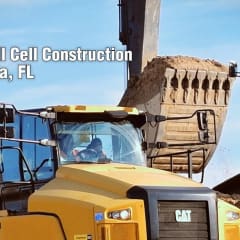
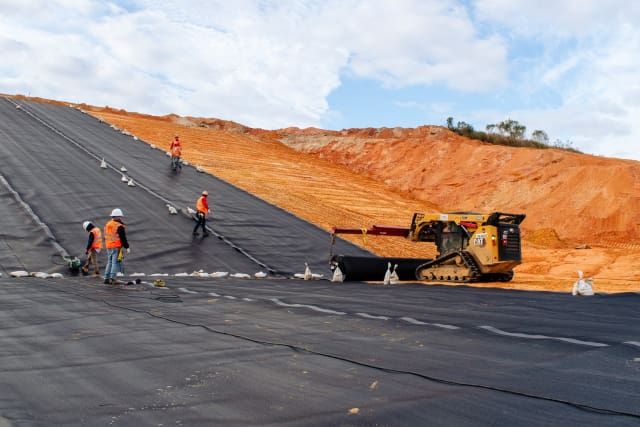
Full liner system installation for new MSW cells – from subgrade acceptance through LCRS installation, geomembrane deployment and seaming, and final CQA documentation. We sequence our work with the earthwork contractor to maintain your construction schedule. COMANCO has completed new cell construction ranging from small municipal cells of a few acres to large regional facility expansions exceeding 50 acres in a single liner contract.
Landfill expansions and vertical extensions
Adding new cells adjacent to or above existing liner systems requires careful coordination at tie-in zones where the new liner connects to the existing system. COMANCO’s experience with liner-to-liner tie-ins, boot connections, and anchor trench work in confined or partially operational areas makes us the right contractor for expansion projects where the existing cell cannot be taken out of service.
Landfill caps and final closure systems
Final closure involves installing a low-permeability cap system over the waste mass – typically including a gas venting or collection layer, a geomembrane cap, a drainage geocomposite, and a protective soil layer. Cap installation requires working on sloped, uneven waste surfaces with careful attention to stability and seaming geometry. COMANCO has completed cap installations for both actively closing facilities and phased cap construction on operating landfills.
Leachate pond and storage lagoon lining
Leachate generated by landfill operations requires storage before treatment or disposal. COMANCO installs liner systems for leachate holding ponds, evaporation basins, and collection lagoons – often as part of a larger landfill construction project or as a standalone scope when existing leachate infrastructure needs to be expanded or relined.
Landfill gas collection and energy recovery infrastructure
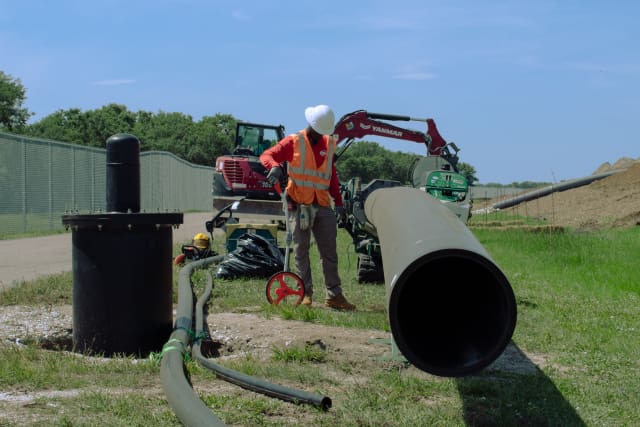
COMANCO installs landfill gas (LFG) collection systems, including vertical extraction wells, horizontal collection headers, HDPE pipe networks, and condensate management infrastructure. For facilities pursuing waste-to-energy projects, we can coordinate LFG collection system installation with the liner and earthwork scope under a single construction contract.
Emergency liner repair
A liner failure at an operating landfill is a production and regulatory emergency. COMANCO provides emergency liner repair services for geomembranes, HDPE pipe systems, pipe boots, batten bar connections, and anchor trench repairs. Call Us Immediately if you need emergency liner repair – 813-988-8829.
COMANCO has completed landfill liner installations ranging from single-cell projects to multi-million-square-foot facility expansions.
Recent projects include:
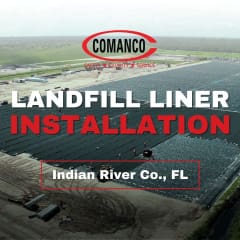
A 20-acre landfill cell in Central Florida where COMANCO installed approximately 800,000 square feet of 60-mil textured HDPE liner as part of a full geosynthetic system including GCL, geocomposite, and geotextile – plus installation and connection of control panels to existing leachate storage tanks.
A Class I Landfill Expansion and Temporary Closure in Palm Beach County, Florida, involving more than two million square feet of liner and geocomposite materials – including over 1.5 million square feet of 60-mil HDPE liner, 1.25 million square feet of geocomposite, and more than 615,000 square feet of GCL, alongside full earthwork and piping scope.
A 15-acre landfill cell completed with a five-layer geosynthetic system, with the crew installing over 775,000 square feet of 60-mil HDPE textured geomembrane.
What Is Leachate and Why Does Liner Integrity Matter
Leachate is the liquid that forms when water – from precipitation, decomposition of organic waste, and moisture already present in the waste mass – percolates through a landfill and picks up dissolved and suspended contaminants. Those contaminants include heavy metals, ammonia, chloride, volatile organic compounds (VOCs), and biological material. Leachate from an unlined or inadequately lined landfill can reach groundwater tables, contaminating drinking water sources and triggering environmental enforcement actions that can cost facility operators orders of magnitude more than the liner system that would have prevented the problem.
The geomembrane liner is the primary barrier between the waste mass and the surrounding environment. A liner with failed seams, punctures that went undetected because of inadequate testing, or installation defects that were not documented and repaired is not a barrier – it is a liability waiting to be discovered. This is why installation quality, seam testing, and QC documentation are not box-checking exercises. They are the proof that the liner system will perform as designed for the facility’s active and post-closure life.
COMANCO’s quality control process exists because we understand this. Every test we run, every repair we document, and every as-built record we deliver is a layer of evidence that your liner system was installed correctly. That evidence protects your facility, your permit, and your organization.
Frequently Asked Questions
What types of landfill liner systems does COMANCO install?
COMANCO installs the full range of geomembrane-based liner systems used in solid waste containment, including single composite liners, double composite liners, GCL-based systems, leachate collection and removal systems (LCRS), and final cover and cap systems. We work with HDPE, LLDPE, and VLDPE geomembranes in thicknesses from 40 to 100 mil, as specified by the project’s design engineer and CQA plan. Material selection is the design engineer’s responsibility – our job is to install whatever system your project specifies to the highest available standard.
How long does landfill liner installation take?
Installation timeline depends on cell size, liner system complexity, site conditions, and subgrade preparation schedule. A typical new Subtitle D cell of 5 to 10 acres takes approximately 4 to 8 weeks from COMANCO mobilization through final QC package delivery. Larger cells or multi-layer systems take proportionally longer. COMANCO’s pre-construction planning process includes a detailed installation schedule coordinated with your earthwork contractor – we will give you a realistic timeline during the quote process, not an optimistic one.
Does COMANCO supply the geomembrane materials or just install them?
COMANCO can supply and install geosynthetic materials on the same project, providing a single point of accountability for material quality and installation performance. We can also install owner-supplied or engineer-specified materials where the project requires a particular manufacturer’s product. If you have questions about material sourcing for your project, discuss them with our team during the quote process and we will find the approach that works best for your procurement structure.
What certifications do COMANCO’s liner installation crews hold?
COMANCO’s welding technicians are certified through the International Association of Geosynthetic Installers (IAGI) – the highest available certification standard for geomembrane installation. We have more than 80 IAGI-certified welding technicians on staff. COMANCO is also registered with ISNetworld and Avetta, satisfying the contractor prequalification requirements used by most major solid waste operators, municipalities, and engineering firms. All crew members working on projects in regulated environments complete site-specific safety orientations as required by the facility.
How does COMANCO’s QA/QC process work for landfill liner installation?
COMANCO’s QA/QC process uses GeoCAAB, our proprietary construction quality control software. GeoCAAB tracks every panel by a unique ID from deployment through seaming, testing, and any repairs. Seam testing results – both non-destructive air channel or vacuum box testing and destructive coupon tests – are logged against the specific seam ID in real time. GPS coordinates tie every data point to the physical location on the liner system. At project completion, GeoCAAB generates a complete digital QC package including the georeferenced as-built drawing, seam index, repair index, coupon test reports, and daily field logs – formatted for CQA engineer review and regulatory submittal.
Can COMANCO handle both the earthwork and the liner installation for a landfill project?
Yes. COMANCO offers turnkey earthwork and geosynthetic liner installation services. Integrating both scopes under one contractor eliminates the coordination gap between subgrade preparation and liner installation – a gap that is one of the most common sources of liner quality problems and schedule delays on multi-contractor landfill projects. Our earthwork crews and liner crews work from the same project management structure, which means subgrade acceptance and liner deployment can be coordinated in real time rather than through change orders between competing contractors.
Does COMANCO work on landfill liner repair and emergency response projects?
Yes. COMANCO provides liner repair services for geomembranes, HDPE pipe systems, pipe boot connections, and batten bar repairs. For emergency liner failures at operating facilities, our crews can mobilize on short notice. Contact our emergency line at 813-988-8829 for rapid mobilization. For non-emergency repair and maintenance work, contact our project team for a site assessment and scope evaluation.
Get a Free Quote for Your Landfill Liner Project
COMANCO serves landfill liner installation projects across the United States from our offices in Plant City, Florida and Elko, Nevada. Whether you are planning a new landfill cell, expanding an existing facility, closing a completed cell, or managing an emergency repair, our project team is ready to discuss your scope and provide a detailed quote.
We offer site visits as part of our pre-project evaluation at no charge. If you are in the design phase, we are available to answer technical questions your engineer may have about installation sequencing, subgrade requirements, or CQA coordination before your project goes to bid.
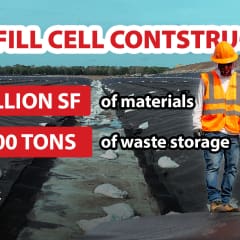
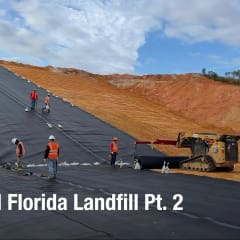
See Our Expertise in Action
Watch our project videos for examples of each service and project type.
See our success stories.
OUR TEAM
IAGI
Certified
Welders
Our certified welders ensure the integrity and longevity of your geomembrane liner installations.
MSHA
TRAINED &
COMPLIANT
Our team adheres to all Mine Safety and Health Administration (MSHA) regulations, ensuring a safe working environment on every project.
.58
EMR
RATING
Our consistently low Experience Modification Rate (EMR) reflects our unwavering commitment to safety.
Prioritizing Safety First, Always
COMANCO maintains a strong safety culture through continuous safety trainings, regular safety meetings, empowering Stop Work Authority, and utilizing a Safety Observation QR code to ensure a safe working environment on every solid waste project.
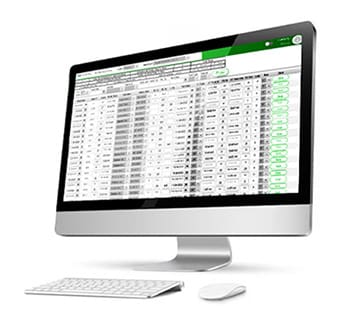
Quality Assured, before & after
COMANCO utilizes GeoCAAB to ensure the highest quality installations, providing meticulous documentation and verification throughout the project lifecycle.
COMANCO, a Trusted Partner
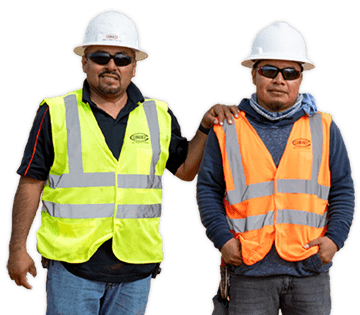
COMANCO is a trusted partner with over 37 years of experience in the solid waste industry, providing reliable and expert solutions.
Projects & Services
Landfill Cell Construction
Contact COMANCO
Corporate Headquarters
4301 Sterling Commerce Dr.,
Plant City, FL 33566
Plant City, FL Corporate Office: 813-988-8829
Elko, NV Office: 775-778-9577